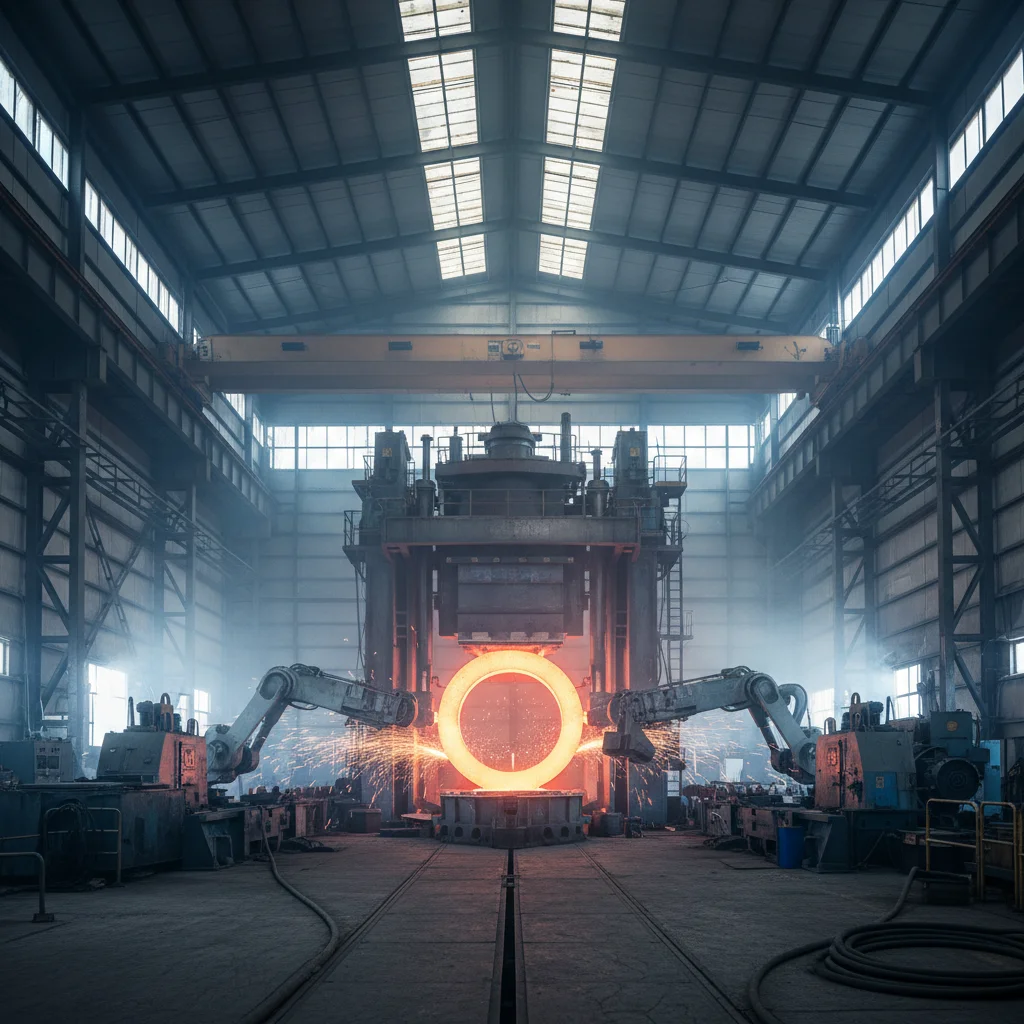
In the demanding world of industrial piping, the structural integrity of connection points often determines the safety and longevity of an entire plant. A professional forged pipe stub section factory provides the critical bridge between standard piping and heavy-duty equipment, offering components that can withstand extreme pressures where standard seamless pipes typically fail. By focusing on grain flow and material density, these specialized sections ensure that transition zones are not the weakest link in a high-performance system.
The global shift toward higher-pressure chemical processing and deeper geothermal energy extraction has increased the reliance on custom forged components. Unlike casting or simple fabrication, the forging process used by a specialized factory eliminates internal voids and porosity, creating a monolithic structure. This ensures that critical components like nozzle necks and transition pieces maintain their mechanical properties even under severe thermal cycling and corrosive environments.
Selecting the right forged pipe stub section factory is essential for engineers who require precise wall thicknesses and absolute material continuity. From carbon steel A105 to high-grade stainless 316L, the ability to tailor the forging to exact equipment drawings allows for seamless integration into complex piping networks, significantly reducing the risk of fatigue-induced failure.

The Technical Essence of a Forged Pipe Stub Section Factory
A forged pipe stub section factory operates on the principle of controlled plastic deformation. By applying immense pressure to heated metal ingots, the factory transforms the random internal structure of the raw material into a directional grain flow that follows the geometry of the pipe section. This process is fundamentally different from casting, as it closes internal pores and maximizes the density of the metal.
This structural refinement is what allows forged pipe sections to handle extreme wall thicknesses—up to 250mm—which are simply unavailable in standard pipe catalogs. Whether it is for a heavy-wall cylinder or a transition piece, the forging route ensures that the component can withstand high-pressure environments without the risk of longitudinal splitting or stress corrosion cracking.
Material Specifications and Grade Versatility
The ability of a forged pipe stub section factory to work with a wide spectrum of materials is critical for matching the chemical and thermal needs of a project. Carbon steels like A105 are the industry standard for general pressure services, while A350 LF2 is utilized for low-temperature environments to prevent brittle fracture. These materials are selected based on the specific operational window of the piping system.
For more aggressive environments, alloy steels such as A182 F11 and F22 are employed to offer superior creep resistance and strength at elevated temperatures. These are often used in power plant piping and high-pressure steam lines where thermal stability is paramount. The forging process ensures that these alloying elements are distributed uniformly throughout the piece.
Furthermore, stainless steels like 304 and 316L are forged for applications requiring maximum corrosion resistance, such as in pharmaceutical or offshore oil and gas installations. By controlling the heat treatment—ranging from normalizing and tempering to quenching—the factory can fine-tune the mechanical properties to meet the specific hardness and tensile requirements of the end-user.
Precision Machining and Dimensional Accuracy
The value of a high-end forged pipe stub section factory extends beyond the forging hammer to the precision machining center. Because forged sections are often used as "blanks," they are designed with generous machining allowances. This allows for the exact profiling of bores, ends, and faces to match the final equipment drawings with micron-level precision.
Achieving perfect ID/OD concentricity is a hallmark of a professional forged pipe stub section factory. When these sections are used as transition pieces or nozzle necks, any deviation in concentricity can lead to uneven stress distribution and welding difficulties. Precision machining ensures that the face squareness is absolute, allowing for a seamless fit-up during the assembly of high-pressure vessels.
Moreover, weld preparation is integrated into the machining phase. Whether the design requires a bevel, a square cut, or a custom profile, the factory ensures that the edge preparation is optimized for the specific welding sequence of the project. This reduces the time spent on-site during installation and minimizes the risk of weld defects in critical zones.
Structural Integrity vs Standard Piping
When comparing heavy forged sections to standard seamless pipe stock, the primary differentiator is the grain structure. Standard pipes are produced through extrusion or piercing, which can leave certain vulnerabilities in the wall thickness. In contrast, a forged pipe stub section factory uses a process that optimizes grain flow, making the part significantly more resistant to impact and high-pressure fatigue.
Additionally, the flexibility in dimensions is unparalleled. While standard pipes are limited to fixed market sizes, forged sections can be produced with custom wall thicknesses up to 250mm and outside diameters up to 1500mm. This allows engineers to design systems that are optimized for safety rather than constrained by available catalog sizes.
Performance Comparison: Forged vs Standard Sections
Critical Industrial Applications and Use Cases
Forged pipe sections are indispensable in the petrochemical and oil and gas sectors, where they serve as reinforced connection zones. In these environments, the sections are often used as nozzle necks for high-pressure reactors or heat exchanger shells, where the risk of corrosion and pressure spikes requires a monolithic grain structure that only a specialized factory can provide.
Beyond petrochemicals, these components are vital in power generation and heavy machinery. For example, in the construction of high-pressure steam boilers, forged stub sections are used as transition pieces to connect large-diameter piping to vessel walls. Their ability to be custom-machined means they can fit perfectly into complex geometries, ensuring a leak-proof seal in mission-critical infrastructure.
Quality Assurance and Certification Standards
In the forging industry, quality is not just a goal but a safety mandate. A reputable forged pipe stub section factory implements a rigorous inspection protocol that begins with raw material tracking. Full heat-number traceability from the raw ingot to the final shipped component ensures that every piece of metal can be traced back to its original chemical composition.
Non-destructive testing (NDT) is the backbone of quality assurance. Ultrasonic Testing (UT) is used to detect any internal flaws or inclusions, while Positive Material Identification (PMI) confirms that the material grade matches the order specifications. These steps are essential for components that will operate under extreme stress, where a single internal void could lead to catastrophic failure.
The final documentation usually includes the EN 10204 3.1 certificate, which provides a verified record of the material's mechanical properties and heat treatment history. Combined with detailed dimensional reports, this certification package gives engineers the confidence that the forged pipe sections will perform exactly as designed in the field.
Investment ROI and Long-Term Reliability
While the initial cost of a custom forged section may be higher than that of standard pipe stock, the long-term return on investment (ROI) is significantly greater. The superior resistance to fatigue and corrosion means that forged components have a much longer service life, drastically reducing the frequency of replacements and the cost of unplanned downtime.
From a safety perspective, the reliability of forged components reduces the risk of leaks and explosions in high-pressure environments. This lowered risk profile can lead to lower insurance premiums for industrial plants and a safer working environment for personnel, providing an intangible but invaluable social and operational benefit.
Furthermore, the flexibility in design provided by a forged pipe stub section factory allows for more efficient equipment layouts. By optimizing the wall thickness and dimensions to the exact needs of the application, engineers can reduce overall material waste and improve the hydraulic efficiency of the piping system.
Analysis of Forged Section Value vs Standard Pipe Stock
| Comparison Factor |
Standard Pipe Stock |
Heavy Forged Section |
Industrial Impact |
| Structural Strength |
Limited/Standard |
Superior/Enhanced |
Higher Safety Margin |
| Wall Thickness |
Fixed Market Sizes |
Fully Customizable |
Optimized Design |
| Grain Structure |
Linear/Non-uniform |
Monolithic/Forged |
Fatigue Resistance |
| Machining Allowance |
Low/Restrictive |
High/Flexible |
Precision Integration |
| Maintenance Cost |
Moderate to High |
Low/Minimal |
Reduced Downtime |
| Long-term ROI |
Lower (Replacement focus) |
Higher (Lifecycle focus) |
Sustainable Operation |
FAQS
Forged pipe sections are used when standard pipes cannot provide the necessary wall thickness or structural integrity. Forging optimizes the grain flow, making the part significantly stronger and more resistant to high pressure and impact compared to seamless pipe stock, which is crucial for transition zones in heavy equipment.
We offer a comprehensive range of materials including Carbon Steel (A105), Low Temperature Steel (A350 LF2), Alloy Steel (A182 F11/F22), and Stainless Steel (304/316L). This variety ensures that the components can be tailored to withstand specific corrosive, thermal, and pressure requirements of different industrial environments.
Yes, one of the primary advantages of our forged sections is the substantial machining allowance. We can precisely machine the bores, ends, and exterior profiles to match your exact equipment drawings, ensuring high concentricity and perfect fit-up for your specific project requirements.
Every shipment is accompanied by comprehensive documentation, typically including an EN 10204 3.1 certificate, detailed dimensional reports, Positive Material Identification (PMI), and Ultrasonic Testing (UT) reports as required to ensure zero-defect delivery for mission-critical applications.
Typical applications include high-pressure process pipe sections, transition pieces for heavy industrial equipment, heat exchanger shells, and reinforced connection zones in petrochemical plants and power generation facilities where standard piping is insufficient.
Depending on the material grade and end-use application, we provide several heat treatment options including Normalized & Tempered, Quenched & Tempered, or Annealing. These processes are essential for achieving the optimal mechanical properties, such as hardness and toughness, required for the operating environment.
Conclusion
In summary, the role of a professional forged pipe stub section factory is to provide the structural backbone for the world's most demanding industrial piping systems. By leveraging the superior grain structure of the forging process and combining it with precision machining and rigorous NDT inspections, these components eliminate the vulnerabilities associated with standard piping. The result is a system that offers unmatched pressure resistance, dimensional accuracy, and long-term reliability.
As industrial operations continue to push toward higher pressures and more extreme temperatures, the transition from standard stock to custom forged sections is no longer an option but a necessity for safety and efficiency. We recommend that engineers prioritize material continuity and heat-treatment verification to ensure the longevity of their infrastructure. For those seeking high-performance forging solutions, visit our website: www.yxs-forging.com.