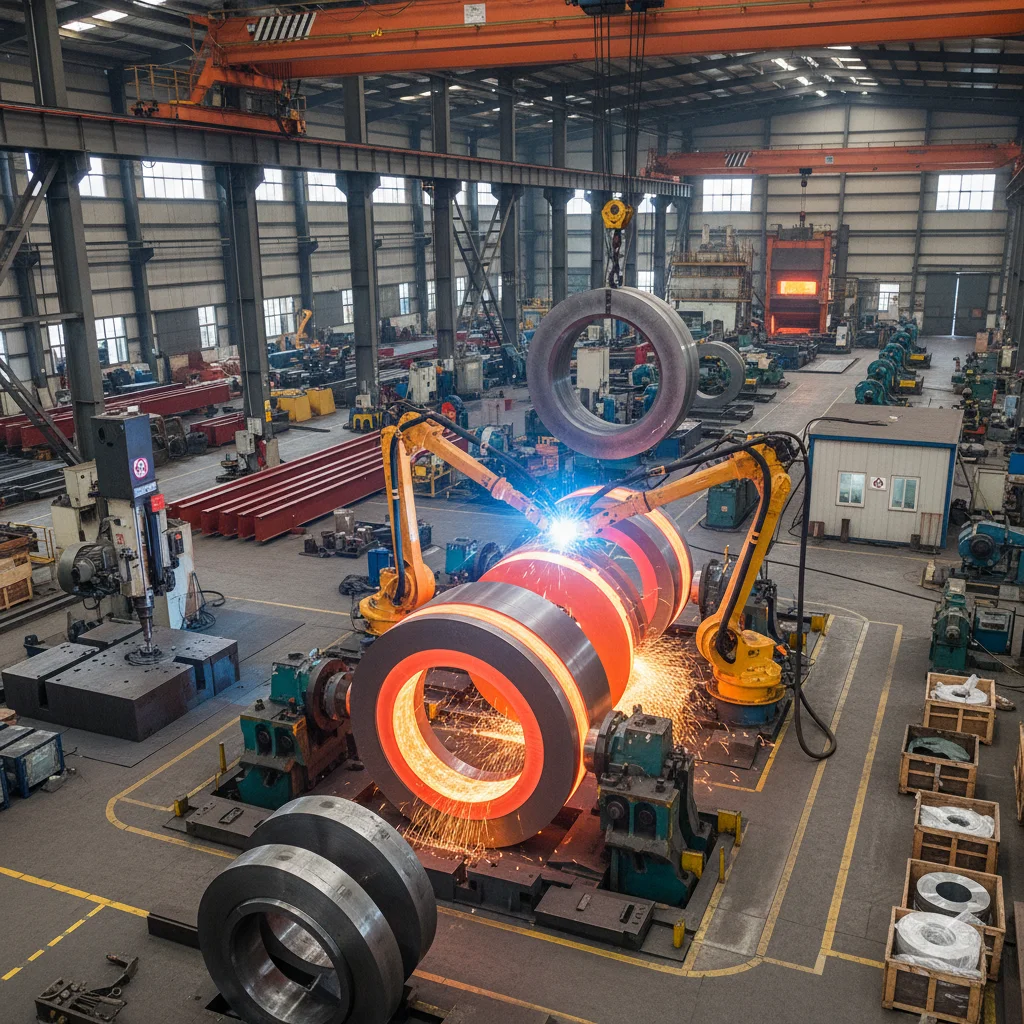
The global demand for high-precision cylindrical components has led to a sophisticated evolution in how industrial partners source their forged parts. In the complex ecosystem of heavy machinery and piping, finding a reliable SO flange factory or a specialized forging supplier is critical for ensuring structural integrity under extreme pressure. These components serve as the backbone for load-bearing assemblies, where the slightest deviation in wall thickness or bore straightness can lead to catastrophic system failure.
Across various sectors, from petrochemical plants to rotating machinery assemblies, the transition toward forged hollow geometries has replaced many fabricated alternatives. The core challenge lies in maintaining consistent material properties throughout the forging process, ensuring that the part can withstand heavy-duty axial and radial loads. By prioritizing controlled bore allowances and stable wall thickness, manufacturers can significantly reduce the risk of fatigue and wear in critical industrial environments.
For procurement managers and engineers, the selection of an SO flange factory and forging partner depends on the ability to deliver comprehensive documentation and rigorous non-destructive testing. Whether it is for support sleeves or heavy-duty machined tubular parts, the synergy between heat treatment and final machining determines the longevity of the equipment. Understanding these technical nuances is essential for optimizing equipment safety and operational efficiency.

The Role of Forging in Large Sleeve Production
Large sleeve forgings are specifically engineered for cylindrical duties where the component must effectively carry heavy loads through its wall section, bore, and end faces. Unlike cast or fabricated parts, forged sections offer superior grain flow and continuity, which translates to higher pressure confidence and structural reliability. This makes them indispensable for support sleeves and wear sleeves in high-stress environments.
When sourcing from a professional SO flange factory or forging specialist, buyers prioritize the availability of adequate stock for boring and facing. The ability to supply these as thick hollow forgings ensures that the final machining of fits, shoulders, and functional sealing surfaces can be performed with precision, ensuring a perfect fit for rotating assembly components.
Material Selection for Heavy-Duty Cylindrical Parts
The choice of material is the first line of defense against mechanical failure in heavy-duty machined tubular parts. Depending on the application, materials typically range from carbon steel for general structural support to alloy steel and stainless steel for environments requiring high corrosion resistance or extreme temperature stability. Drawing-based grades are also frequently employed to meet specific project-based chemical compositions.
Each material grade responds differently to heat treatment, which is a critical phase in the production of large sleeves. Properly managed heat treatment ensures that the forged block achieves the necessary hardness and toughness, preventing premature wear in rotating assemblies. This metallurgical stability is what allows the part to maintain its dimensions under constant load.
For those coordinating with an SO flange factory or heavy forging plant, the integration of material certification (such as EN 10204 3.1) is non-negotiable. This ensures that every batch of steel used in the production of sleeves, shells, and hydraulic parts meets the international standards required for safety-critical infrastructure.
Technical Precision in Bore and Face Machining
Achieving a high degree of bore straightness and wall-thickness consistency is the primary technical goal for any SO flange factory providing cylindrical forgings. The machining scope often includes complex OD/ID work, counterbores, and the creation of precise shoulders that serve as the datum for the rest of the assembly.
The supply condition of these parts can be tailored to the customer's specific process route. Whether supplied as-forged, heat-treated, rough-machined, or semi-finished, the goal is to provide enough machining allowance to allow for final honing and facing. This flexibility ensures that the SO flange factory can support a wide range of downstream machining requirements.
Special attention is given to the sealing areas and functional wear surfaces. By controlling the bore allowance and ensuring stable wall thickness, the forging provides a reliable base for precision grinding or polishing, which is essential for components used in rotating assembly systems where friction must be minimized.
Load-Bearing Stability and Wall Reliability
The structural integrity of a forged sleeve is measured by its load-bearing stability. Forged cylindrical sections are inherently more reliable than fabricated alternatives because they lack the weld seams that often act as stress concentrators. This continuity is vital for parts that must sustain high pressure through their wall sections without risk of deformation or rupture.
Reliability is further enhanced by the strict control of the hollow geometry. Custom bores and end forms are arranged according to specific drawings to ensure that the load is distributed evenly across the component's face. This precision is a hallmark of a high-quality SO flange factory that understands the physics of heavy-duty industrial loads.
Forging Performance Comparison by Component Type
Global Applications of Forged Sleeves
Forged sleeves and hollow cylinders find application in the most demanding industrial zones globally. In the oil and gas sector, they are used as support sleeves for heavy-wall piping and valve assemblies. In the power generation industry, these components are critical for rotating assembly components in turbines, where stability at high RPMs is non-negotiable.
Beyond heavy industry, they are utilized in hydraulic systems as heavy-wall cylinders and in specialized machinery as wear sleeves. The ability of an SO flange factory to customize the hollow geometry—including shoulders and specific end forms—allows these parts to be integrated into everything from mining equipment to aerospace support structures.
Quality Assurance and NDT Documentation
Quality assurance for large forgings extends far beyond simple dimensional checks. For inspection-sensitive orders, a comprehensive suite of Non-Destructive Testing (NDT) is employed. Ultrasonic Testing (UT) is used to detect internal flaws, while Magnetic Particle (MT) and Penetrant Testing (PT) identify surface discontinuities. This ensures that the internal structure of the sleeve is free from voids or cracks.
Positive Material Identification (PMI) and hardness testing are also standard procedures to verify that the chemical composition and mechanical properties match the project specifications. These tests are often witnessed by third-party inspectors to provide an unbiased verification of quality, which is essential for project-based orders with strict regulatory requirements.
The final deliverable from a professional SO flange factory is a complete project dossier. This includes the EN 10204 3.1 certificate, heat-treatment records, dimensional reports, and NDT results. This level of documentation provides the end-user with the confidence that the part will perform reliably throughout its service life.
Customization and Supply Chain Integration
Modern industrial procurement requires more than just a product; it requires a partner capable of supply chain integration. Customization begins with the drawing and extends to the final machining allowance. Whether the client needs a forging blank for in-house machining or a semi-finished part with precision journals, the production route can be adjusted to match the customer's internal process.
Integrating a reliable SO flange factory into the supply chain reduces lead times and minimizes waste. By arranging the machining scope—such as drilling and facing—before shipment, the buyer can move directly to final assembly, significantly accelerating the project timeline.
The flexibility to handle various geometries, from simple sleeves to complex stepped shafts and hollow cylinders, makes these forging services a one-stop solution. By aligning the supply condition with the project scope, manufacturers can ensure that every component is optimized for its specific functional role.
Technical Specifications and Inspection Matrix for Forged Sleeves
| Component Category |
Primary Material |
Critical Inspection |
Standard Documentation |
| Support Sleeves |
Carbon Steel |
Dimensional Check |
EN 10204 3.1 |
| Wear Sleeves |
Alloy Steel |
Hardness Testing |
Heat Treatment Record |
| Rotating Components |
Stainless Steel |
UT/MT Inspection |
NDT Report |
| Hydraulic Cylinders |
Alloy Steel |
Bore Straightness |
Dimensional Report |
| Machined Tubular Parts |
Custom Grade |
PMI Verification |
Material Cert |
| Hollow Shafts |
Alloy Steel |
Ultrasonic Testing |
Full Project Dossier |
FAQS
Forged sleeves, produced by a professional SO flange factory or forging plant, offer superior grain flow and a denser molecular structure. This results in significantly higher fatigue resistance, better load-bearing stability, and a reduced risk of internal voids compared to cast components, making them safer for high-pressure applications.
Yes, forged sleeves can be supplied in various conditions. You can choose from as-forged, heat-treated, or rough-machined options. This allows you to receive a part with a controlled bore allowance and sufficient stock for final honing, facing, and sealing-area machining according to your own precision requirements.
For high-spec projects, we offer Ultrasonic Testing (UT) for internal integrity, Magnetic Particle (MT) or Penetrant Testing (PT) for surface cracks, and Positive Material Identification (PMI) to verify alloy composition. Hardness and mechanical testing are also available to ensure the part meets the required strength profiles.
Depending on the environment, alloy steel or stainless steel are typically preferred due to their superior hardness and corrosion resistance. These materials respond well to specific heat-treatment processes, which are essential for creating a durable wear surface that can withstand constant friction in rotating components.
A standard package includes the EN 10204 3.1 material certificate, detailed heat-treatment records, a dimensional inspection report, NDT reports (UT/MT/PT), and a marking list. For project-based orders, a complete dossier including third-party witness reports can be arranged.
Consistency is achieved through precise control of the forging temperature and the use of high-precision dies. By managing the deformation process and subsequent heat treatment, an SO flange factory ensures that the hollow geometry remains stable, preventing thin spots that could compromise equipment safety.
Conclusion
In summary, the production of large sleeve forgings is a critical intersection of metallurgical science and precision machining. By focusing on wall-section reliability, bore straightness, and rigorous NDT documentation, manufacturers can provide components that ensure the safety and efficiency of heavy-duty industrial systems. The transition from fabricated to forged hollow geometries represents a significant leap in equipment longevity and operational security.
As industries move toward more sustainable and high-performance infrastructure, the role of the specialized SO flange factory and forging expert will only grow. Investing in high-quality, documented forgings today prevents costly failures tomorrow and paves the way for innovation in rotating machinery and high-pressure tubular systems. For professional forging solutions, visit our website: www.yxs-forging.com