- Tel: +86 133 3836 0365
- Email: john@yxs-forging.com

When sourcing high-performance rotating components, engineers often face a critical trade-off between structural rigidity and overall system mass. The selection of a reliable seamless rolled rings factory is not merely a procurement decision but a technical strategy to ensure that circular forged components can withstand extreme torsional loads without premature fatigue. In precision heavy industry, the integrity of a ring forging determines the operational lifespan of the entire machinery assembly.
The significance of this choice becomes evident when integrating seamless rolled rings with other critical forged elements such as Custom Machined Rings, Gear Ring Blanks, and Heavy Wall Cylinders. Unlike welded alternatives, seamless rolled rings eliminate the heat-affected zones associated with joints, providing a homogenous grain flow that is essential for safety-critical industrial applications. This structural continuity is what allows heavy-duty equipment to maintain stability under high-speed rotation and fluctuating thermal conditions.
Navigating the complexities of material grades and forging tolerances requires a partner capable of end-to-end traceability. By analyzing the intersection of metallurgical precision and mechanical design, this guide examines how to optimize the procurement of these components. For those seeking technical excellence in heavy forging, collaborating with a professional seamless rolled rings factory ensures that every ring meets the stringent requirements of international engineering standards.


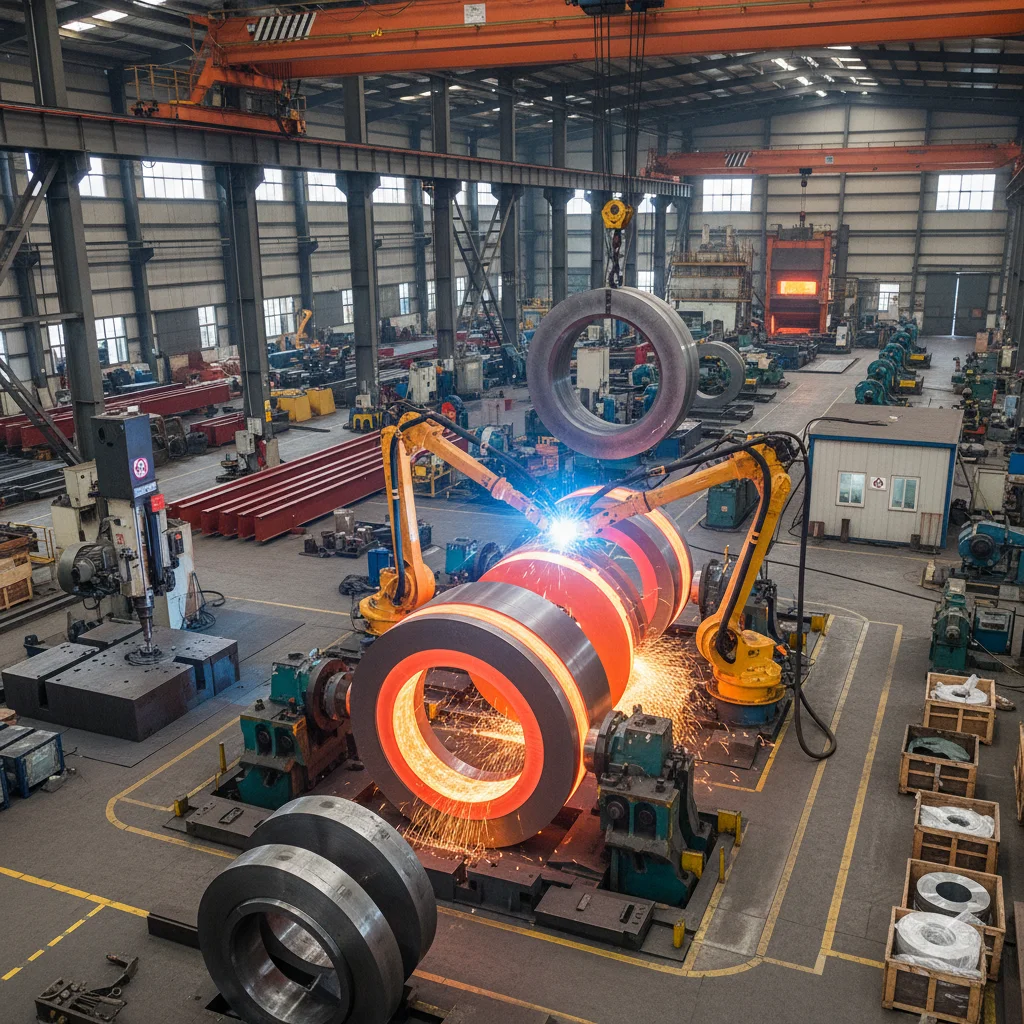
Seamless rolled rings are produced through a specialized forging process where a pre-formed doughnut-shaped billet is compressed and expanded by a pair of rollers. This mechanical action forces the metal to flow circumferentially, creating a continuous grain structure that follows the contour of the ring. This process is fundamentally different from machining a ring from a solid plate, as it optimizes the material's internal strength and reduces waste.
From a metallurgical perspective, the "seamless" nature of these rings means there are no weld seams or joints, which are traditional points of failure under high pressure. By controlling the temperature and the reduction ratio during the rolling phase, the factory can ensure a uniform distribution of mechanical properties across the entire cross-section. This results in a component that possesses superior resistance to impact and fatigue compared to cast or welded counterparts.
The quality of a seamless rolled ring is primarily determined by the precision of the heat treatment and the control of the deformation process. The starting temperature of the billet must be strictly maintained to avoid overheating or under-heating, which could lead to coarse grain structures or internal voids. Once the rolling is complete, quenching and tempering are utilized to achieve the desired hardness and tensile strength, ensuring the ring can withstand specific operational loads.
True forged integrity is achieved when the grain flow is perfectly aligned with the ring's circumference; any deviation in this alignment significantly increases the risk of stress corrosion cracking and reduces the overall fatigue limit of the component.
Furthermore, the selection of raw materials—such as high-strength alloy steels like 42CrMo4 or 34CrNiMo6—plays a decisive role. The purity of the steel and the control of impurities like sulfur and phosphorus are essential for avoiding internal defects during the rolling process. Finally, the precision of the rough machining state determines how well the final component will maintain concentricity after final precision turning and grinding.
The primary operational value of a seamless rolled ring lies in its enhanced structural density. Because the forging process compresses the material, internal porosity is virtually eliminated, which is a common weakness in casting. This high density translates directly into a higher load-bearing capacity, allowing machinery to operate at higher pressures or rotations without the risk of sudden structural failure.
For engineers, this means the ability to design more compact systems. Because the material is stronger per unit of volume, wall thicknesses can be optimized to reduce weight without compromising safety. This weight reduction lowers the rotational inertia of large rings, leading to increased energy efficiency in drive systems and reduced wear on supporting bearings and shafts.
Seamless rolled rings are indispensable in sectors where failure is not an option. In the energy sector, they are used for high-pressure valve bodies and turbine casings, where they must withstand extreme thermal cycling and corrosive environments. The absence of welds ensures that there are no weak points for leaks to develop, making them ideal for pressure equipment and safety-critical fluid systems.
In the heavy machinery and aerospace sectors, these rings serve as the foundation for large bearings, gear blanks, and structural flanges. Whether they are used as the main support ring for a wind turbine hub or as a precision-machined flange in a petrochemical plant, the requirement remains the same: absolute dimensional stability and consistent mechanical properties. This reliability is what allows for the safe operation of oversized industrial components.
Modern ring rolling has evolved from basic manual processes to highly automated systems driven by forging simulations. By using advanced software, manufacturers can predict the material flow before the first blow is struck, minimizing waste and ensuring that the grain structure is optimized for the specific geometry of the ring. This shift toward "digital forging" reduces the reliance on trial-and-error and significantly shortens production lead times.
Another key advancement is the integration of precision rough machining within the same facility. By performing initial boring and turning operations immediately after heat treatment, factories can verify the concentricity of the inner and outer diameters (ID/OD) early in the process. This allows for corrective actions to be taken before the component reaches the final machining stage, ensuring tighter tolerances.
Future developments are likely to focus on the use of specialized alloy steels that offer better corrosion resistance without sacrificing the forgeability of the material. The trend is moving toward "smarter" forgings that can be integrated with sensor technology to monitor stress and wear in real-time, further extending the lifecycle of the equipment.
Despite the advantages of seamless rolling, challenges such as surface laps or internal cracks can occur if the process is not strictly controlled. Laps typically happen during the initial piercing of the billet if the temperature is uneven. To combat this, modern factories employ rigorous Ultrasonic Testing (UT) on both ID and OD surfaces, ensuring that any internal flaw is detected and documented before delivery.
Dimensional warping during the quenching process is another common challenge. Because large rings have significant mass, uneven cooling can lead to distortion. Expert heat treatment specialists manage this by using precise cooling rates and specialized fixtures to maintain the ring's shape. Post-heat treatment straightening and rough machining are then used to bring the component back to the required concentricity.
Ultimately, the solution to these challenges lies in a controlled and auditable manufacturing system. Full heat number tracking and adherence to standards like EN 10204 3.1 ensure that every ring can be traced back to its original ingot. This transparency is essential for projects that require strict quality verification and long-term operational safety.
| Metric | Seamless Rolled | Machined from Solid | Welded Ring |
|---|---|---|---|
| Grain Structure | Circumferential | Linear/Broken | Interrupted |
| Material Waste | Low | Very High | Medium |
| Fatigue Life | Highest | Moderate | Lowest |
| Structural Density | Maximum | High | Variable |
| Lead Time | Moderate | Short | Short |
| Reliability | Project-Grade | Standard | Limited |
The primary difference is the continuity of the material. A rolled seamless ring is forged into a circle without any joints, creating a continuous grain flow that maximizes strength and fatigue resistance. A welded ring is made by bending a plate and welding the ends; the weld zone is a potential point of weakness and is susceptible to stress corrosion and failure under high pressure. Seamless rings are therefore preferred for safety-critical applications.
High-strength alloy steels such as 42CrMo4 and 34CrNiMo6 are typically the best choices for high-stress environments. These materials provide an excellent balance of toughness, hardness, and weldability (if required for assembly). For standard industrial applications, A105 is often sufficient. The choice depends on the specific mechanical requirements, temperature ranges, and corrosive elements present in the operating environment.
Concentricity is ensured through a combination of precise forging control and subsequent rough machining. After the ring is rolled and heat-treated, it undergoes CNC boring and turning to remove the outer skin and establish a precise baseline. Regular inspection reports, including dimensional checks and UT testing, are used to verify that the ID and OD are perfectly aligned before the component is shipped for final machining.
Yes, providing rings in a rough-machined state is a standard industry practice. This involves machining the inner diameter, outer diameter, and the faces to a specific allowance. This provides the customer with a better starting point for final precision machining, reduces the risk of warping during the final stages, and allows for easier transport and handling of oversized components.
You should look for ISO 9001 (Quality Management), ISO 14001 (Environmental), and ISO 45001 (Occupational Health and Safety). For maritime or offshore applications, approval by the China Classification Society (CCS) or similar international bodies is essential. Additionally, ensure the factory can provide EN 10204 3.1 certification, which guarantees that the material and process meet the specified requirements.
While the initial setup for ring rolling is more complex, it is often more cost-effective for large diameters because it drastically reduces material waste. Machining a large ring from a solid forged block requires removing a massive amount of metal, which increases both material costs and machining time. Rolled rings optimize the volume of steel used, providing a better ROI for high-volume or large-scale components.
The transition from standard forged components to seamless rolled rings represents a strategic move toward higher reliability and structural efficiency. By leveraging circumferential grain flow and eliminating weld-related vulnerabilities, these components provide the necessary safety margins for the world's most demanding industrial environments. The combination of precise metallurgy, rigorous UT testing, and controlled heat treatment ensures that every ring serves as a stable foundation for high-performance machinery.
Selecting a manufacturing partner with integrated capabilities—from raw ingot processing to final verification—is essential for project-grade success. Whether you are optimizing a drive system or building high-pressure equipment, precision forging is the key to longevity. For technical consultation on material selection and forging design to optimize your ROI, we invite you to explore the capabilities at www.yxs-forging.com.