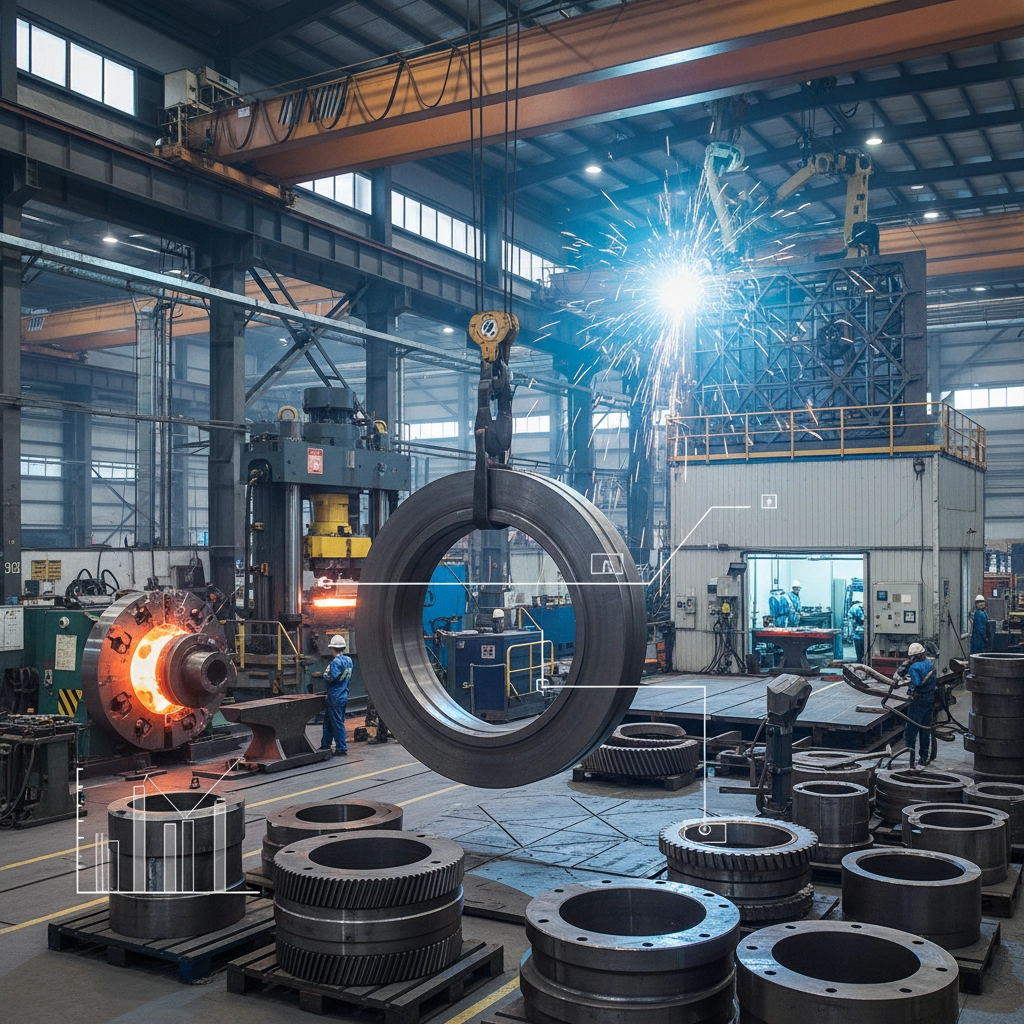
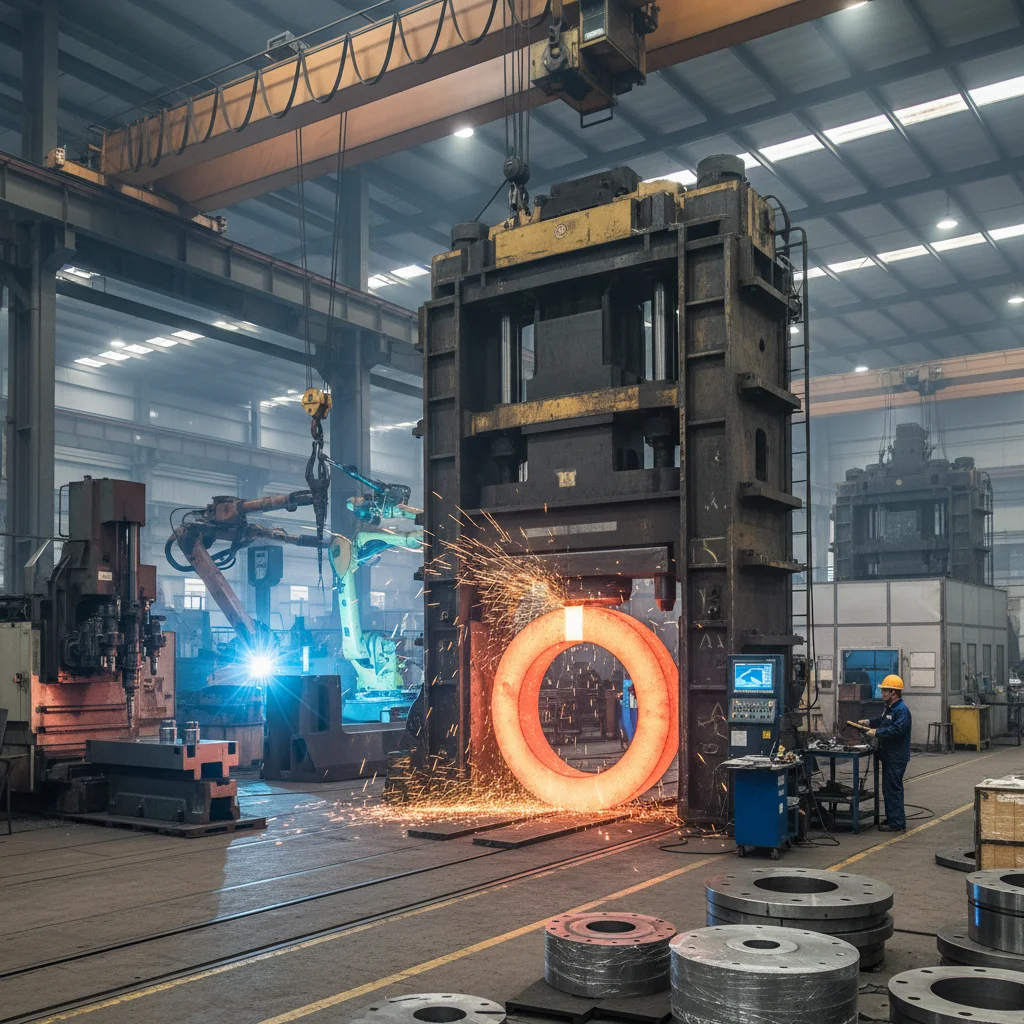
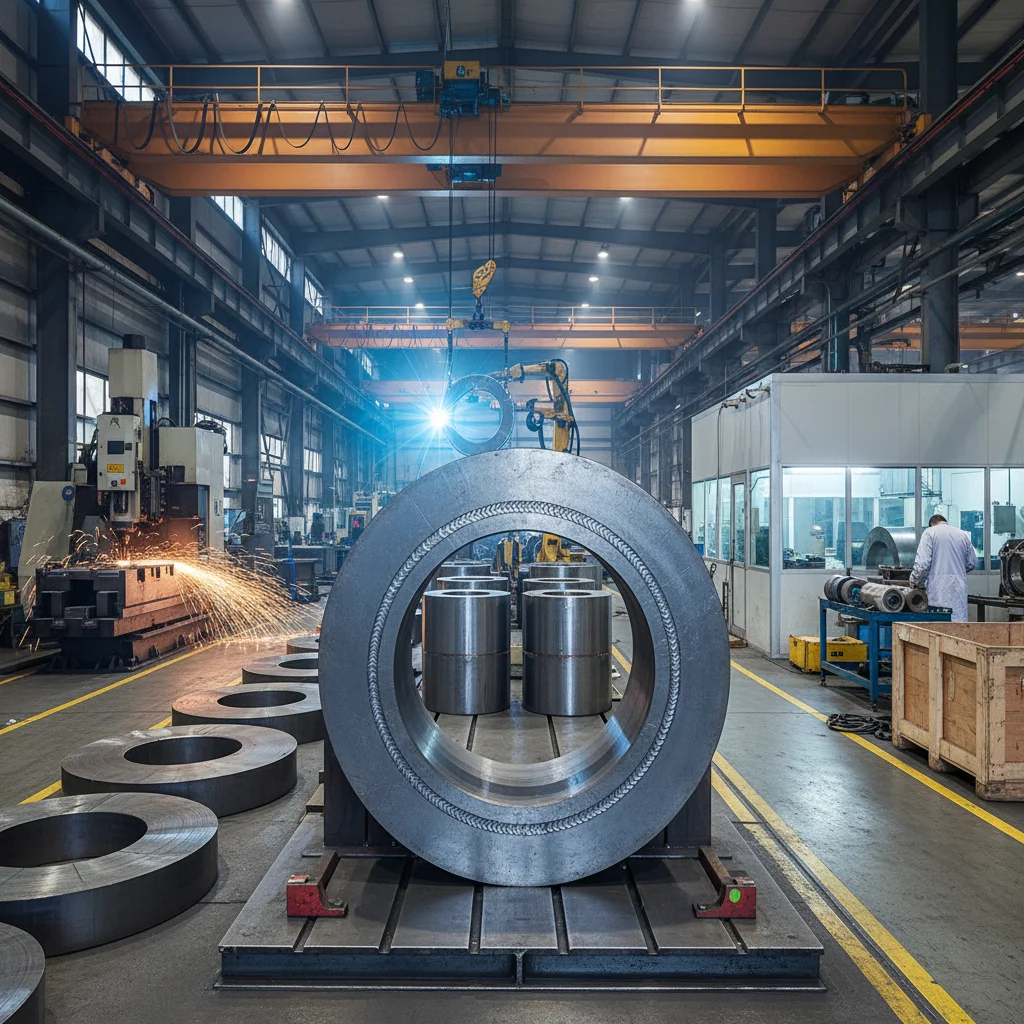
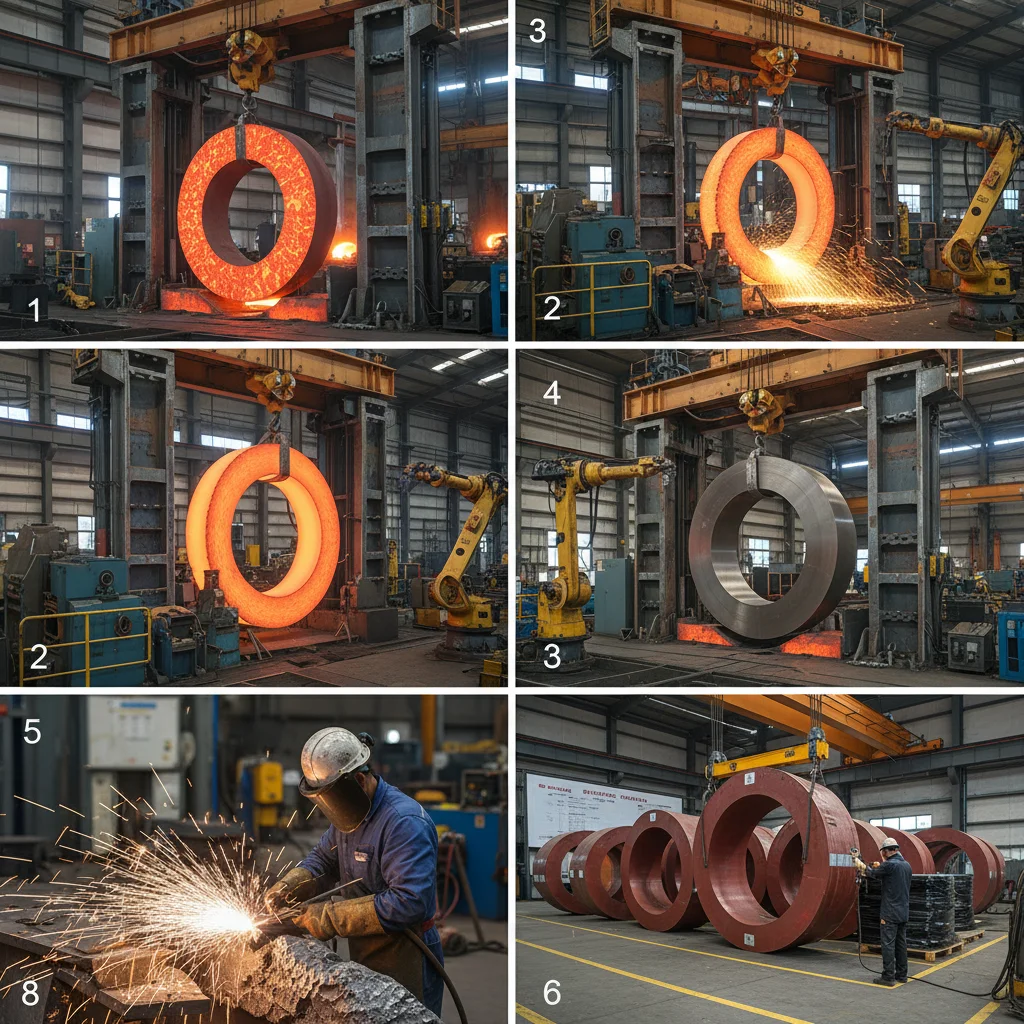
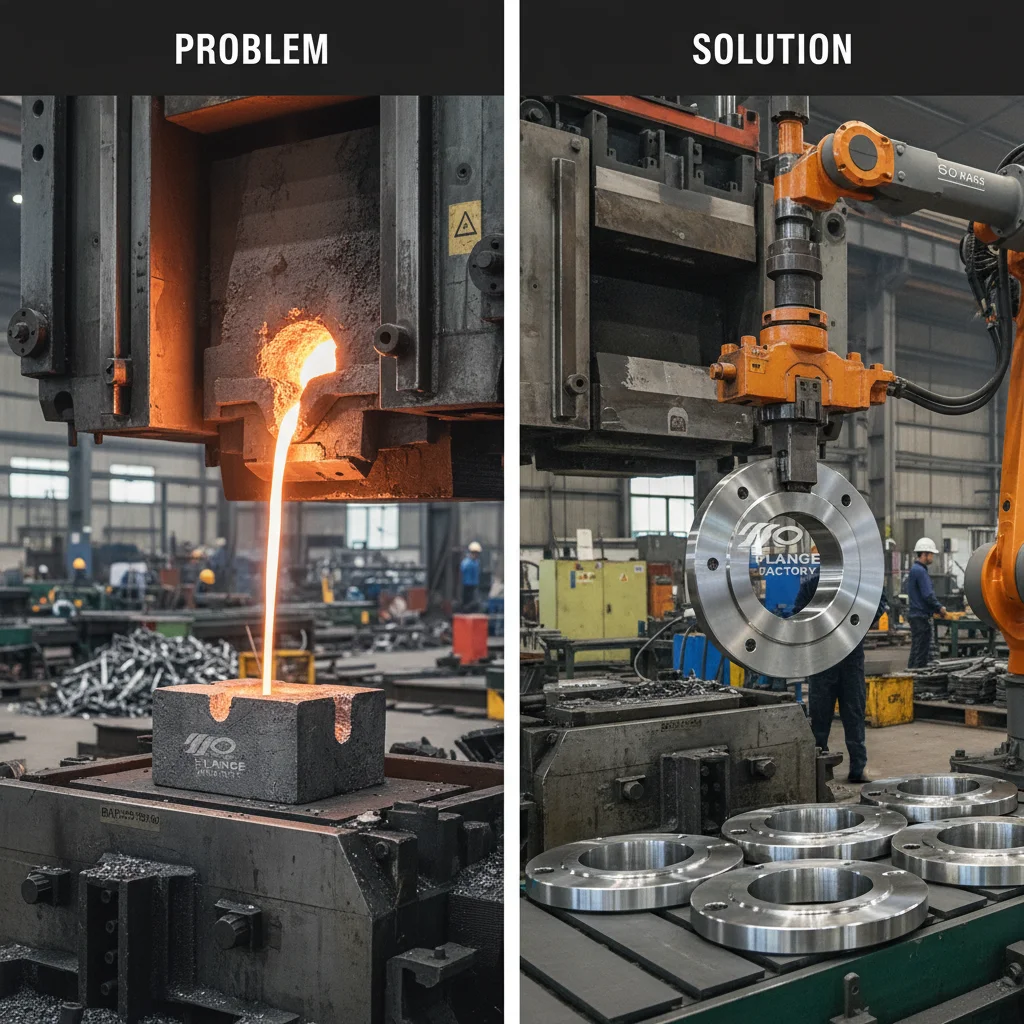
In the demanding landscape of global infrastructure and heavy machinery, the role of a heavy-duty ring forging factory is paramount. These specialized facilities transform raw metal alloys into high-strength, seamless rings that serve as the backbone for turbines, pressure vessels, and aerospace components. By leveraging immense pressure and controlled thermal cycles, these factories ensure that the internal grain structure of the metal is optimized, providing a level of structural integrity that casting or machining from plate simply cannot match.
The global demand for precision-engineered forged rings is driven by the increasing complexity of energy production and the expansion of the maritime and defense sectors. Whether it is a massive wind turbine bearing or a high-pressure flange for a petrochemical plant, the reliability of these components is non-negotiable. A professional heavy-duty ring forging factory employs advanced metallurgy and rigorous quality control to mitigate the risk of catastrophic failure in environments characterized by extreme temperature fluctuations and immense mechanical stress.
Understanding the intricacies of the forging process allows procurement managers and engineers to make informed decisions regarding material selection and tolerance specifications. From the initial billet heating to the final precision machining of Gear Ring Blanks or Large Ring Forgings, every step in a heavy-duty ring forging factory is designed to eliminate voids and porosities. This commitment to excellence not only extends the lifecycle of the industrial equipment but also enhances operational safety and reduces long-term maintenance costs across various heavy industries.
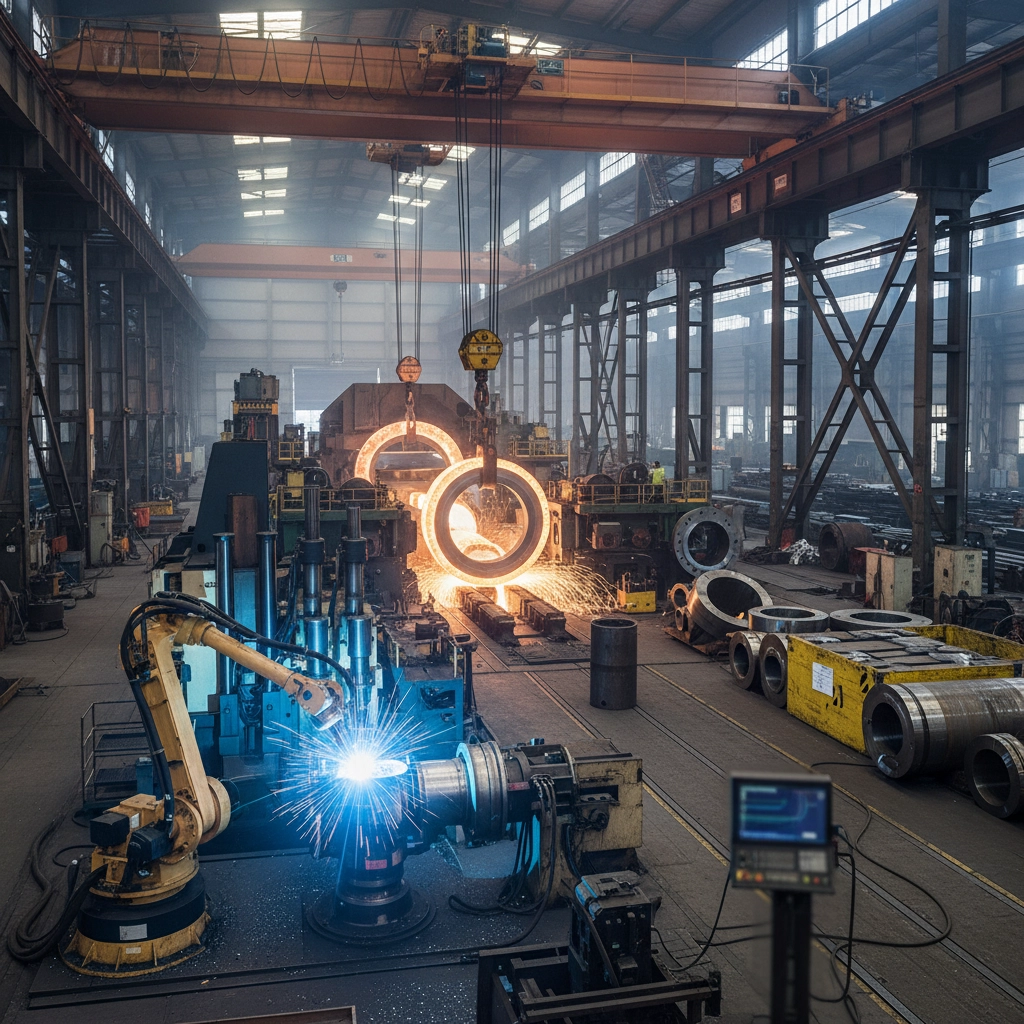
Global Industry Context of Heavy-Duty Ring Forging
The global industrial landscape is currently witnessing a surge in the demand for high-performance metallic components, particularly those capable of withstanding extreme pressures. According to international standards like ISO 9001 and various ASTM specifications, the precision of a heavy-duty ring forging factory is critical for the safety of critical infrastructure. As nations invest in renewable energy—specifically offshore wind farms—the need for massive, corrosion-resistant forged rings for bearings and housings has reached an all-time high.
However, the industry faces a significant challenge: the gap between theoretical design and actual material performance. Many legacy components fail due to internal defects or improper grain flow. By utilizing the specialized capabilities of a modern heavy-duty ring forging factory, industries can overcome these vulnerabilities, ensuring that every Rolled Seamless Ring or Custom Machined Ring meets the stringent safety coefficients required for deep-sea oil exploration or aerospace propulsion.
Defining the Heavy-Duty Ring Forging Factory
In the simplest terms, a heavy-duty ring forging factory is a specialized industrial facility that uses high-capacity presses and rolling mills to shape metal into circular forms. Unlike casting, where metal is melted and poured into a mold, forging involves the mechanical deformation of solid metal at high temperatures. This process "squeezes" the metal, refining its crystal structure and creating a continuous grain flow that follows the contour of the ring, which is essential for resisting fatigue and impact.
This process is deeply connected to the needs of modern heavy industry. For example, in the production of Forged Flanges and Tube Sheet Forgings, the ability to maintain dimensional stability while ensuring zero internal porosity is what separates a high-end factory from a basic machine shop. These rings are not merely "parts" but are engineered solutions that allow for the safe transport of volatile gases or the rotation of massive industrial shafts at thousands of RPMs.
Furthermore, the humanitarian and societal impact of this technology is often overlooked. From the construction of massive water desalination plants to the development of safer nuclear containment vessels, the outputs of a heavy-duty ring forging factory provide the structural reliability necessary to sustain urban growth and ensure the availability of clean energy and water for millions of people worldwide.
Core Components of Forging Excellence
Structural Durability is the primary benchmark of any heavy-duty ring forging factory. By optimizing the forging ratio—the amount of deformation applied to the original billet—factories ensure that the final product, such as Forged Discs or Heavy Shaft Forgings, possesses maximum toughness. This durability is what prevents sudden fractures under load, making forged rings the only viable choice for high-stress aerospace and naval applications.
Material Scalability and Versatility allow a factory to handle a wide array of alloys, from carbon steel and alloy steel to stainless steel and superalloys like Inconel. A top-tier heavy-duty ring forging factory can seamlessly transition between producing simple Sleeves & Bushings and complex Custom Hollow Forgings, ensuring that the specific chemical properties of the metal are preserved throughout the thermal cycling process.
Precision and Dimensional Accuracy are achieved through the integration of forging and CNC machining. By producing "near-net-shape" components, a heavy-duty ring forging factory minimizes material waste (swarf) and reduces the time spent in the final machining phase. This is particularly critical for high-value materials where every kilogram of wasted metal represents a significant financial loss.
Practical Applications and Global Use Cases
The application of forged rings spans across diverse global sectors. In the energy sector, specifically within wind power generation in Northern Europe and China, large-diameter forged rings are used as main bearing races for turbines. These components must withstand millions of cycles of varying wind loads without developing micro-cracks. A heavy-duty ring forging factory provides the necessary scale and precision to produce these massive rings with concentricity tolerances that are measured in microns.
In remote industrial zones, such as the oil fields of the Middle East or the mining regions of Australia, forged components like Nozzle Neck Forgings and Weld Neck Flanges are used in high-pressure piping systems. In these environments, the components are exposed to corrosive agents and extreme heat. The superior grain structure provided by a professional forging factory ensures that these parts do not succumb to stress-corrosion cracking, thereby preventing environmental disasters and ensuring continuous production.
Performance Comparison of Ring Forging Methods
Long-Term Value and Strategic Advantages
Investing in components from a certified heavy-duty ring forging factory offers tangible economic benefits. While the initial procurement cost of a forged ring may be higher than a cast alternative, the total cost of ownership (TCO) is significantly lower. This is due to the extended service life and the reduction in unplanned downtime. In industries where an hour of downtime can cost tens of thousands of dollars, the reliability of a forged ring is an insurance policy against operational failure.
Beyond the financial metrics, there is a profound emotional and logical angle: trust and safety. When an engineer specifies a part from a reputable heavy-duty ring forging factory, they are ensuring the safety of the operators on the ground. Whether it is a pressure vessel in a chemical plant or a landing gear component in an aircraft, the confidence that the material will not fail under peak load provides the peace of mind necessary for innovation and daring engineering feats.
Future Trends in Forging Innovation
The future of the heavy-duty ring forging factory is being shaped by the digital transformation of the shop floor. Industry 4.0 is introducing "Digital Twins," where a virtual model of the forging process is simulated to predict grain flow and thermal distribution before the actual metal is heated. This reduces trial-and-error and allows for the production of increasingly complex geometries, such as Stepped Shafts and intricate Nozzle Neck Forgings, with unprecedented precision.
Sustainability is also becoming a core driver. Modern factories are transitioning toward electric induction heating and hydrogen-powered furnaces to reduce the carbon footprint of the forging process. By integrating energy-efficient rolling mills and implementing closed-loop recycling for scrap metal, the heavy-duty ring forging factory is evolving into a "Green Forge," aligning industrial growth with global environmental goals.
Furthermore, the development of new "Super-Alloys" is expanding the boundaries of what forged rings can achieve. We are seeing the rise of materials that can operate at temperatures previously thought impossible, enabling more efficient jet engines and deeper geothermal energy extraction. The synergy between advanced metallurgy and automated forging presses ensures that the industry will remain relevant in the age of additive manufacturing.
Challenges and Expert Solutions in Forging
One of the most persistent challenges in a heavy-duty ring forging factory is managing internal residual stresses. During the rapid cooling phase, uneven temperature distributions can lead to warping or internal tension, which may cause the ring to distort during final machining. To solve this, expert factories implement sophisticated heat treatment cycles, including normalizing and tempering, to stabilize the microstructure.
Another limitation is the balance between mass production and custom requirements. Many factories struggle to handle "small-batch, high-complexity" orders. The solution lies in the adoption of flexible manufacturing systems (FMS) and modular tooling, allowing the factory to switch between different ring diameters and wall thicknesses without extensive downtime, thus catering to the needs of niche aerospace or medical imaging components.
Lastly, quality verification for massive components often requires expensive and time-consuming Non-Destructive Testing (NDT). The industry is moving toward integrated ultrasonic and radiographic testing systems that can scan a ring in real-time during the forging process. This proactive approach allows a heavy-duty ring forging factory to identify defects early, saving time and ensuring that only flawless components reach the customer.
Analysis of Forging Quality Metrics and Process Control
| Process Stage |
Key Quality Indicator |
Risk Level (1-10) |
Mitigation Strategy |
| Billet Heating |
Thermal Uniformity |
6 |
Automated Temperature Monitoring |
| Ring Rolling |
Grain Flow Alignment |
9 |
Optimized Reduction Ratios |
| Heat Treatment |
Hardness Distribution |
7 |
Controlled Quenching Rates |
| Rough Machining |
Dimensional Stability |
5 |
Stress-Relief Annealing |
| NDT Inspection |
Internal Defect Detection |
8 |
Multi-axis Ultrasonic Scanning |
| Final Finishing |
Surface Roughness (Ra) |
4 |
Precision CNC Grinding |
FAQS
The primary difference lies in the internal structure. A heavy-duty ring forging factory uses mechanical pressure to align the grain flow of the metal, eliminating the gas porosity and shrinkage cavities common in castings. This results in significantly higher fatigue strength and impact resistance, making forged rings safer for high-pressure and high-load applications.
Depending on the application and maintenance, forged rings can last decades. In wind turbines or heavy industrial shafts, they are designed for a 20-25 year lifecycle. Their longevity is due to the refined grain structure and the use of high-grade alloys that resist wear and corrosion far better than standard machined components.
Yes, custom forging is a core capability. Professional factories can work with a vast range of materials—from carbon steel to titanium alloys—and produce rings with specific internal and external diameters, wall thicknesses, and custom machining requirements to meet exact engineering blueprints.
Look for ISO 9001 for general quality management, AS9100 for aerospace components, and API (American Petroleum Institute) certifications for oil and gas equipment. Additionally, ensure the factory provides full Material Test Reports (MTRs) and NDT (Non-Destructive Testing) certifications for every batch.
While energy-intensive, modern factories are becoming more sustainable. By producing near-net-shape rings, they significantly reduce raw material waste compared to machining from a solid block. Many factories are also adopting electric induction heating to lower their carbon emissions.
Importing requires careful logistics planning due to the weight and size. A professional factory will handle the packaging (anti-corrosion coating and heavy-duty crating) and provide the necessary export documentation, including certificates of origin and quality compliance, to ensure smooth customs clearance.
Conclusion
The strategic importance of a heavy-duty ring forging factory cannot be overstated in the context of modern industrial reliability. By transforming raw alloys into high-integrity, seamless components, these facilities enable the safe operation of the world's most critical infrastructure—from the depths of the ocean to the heights of the atmosphere. The combination of optimized grain flow, material versatility, and precision machining ensures that forged rings provide the ultimate balance of strength, durability, and safety.
Looking forward, the integration of AI-driven simulation and green manufacturing will further elevate the standards of the forging industry. For companies seeking to enhance the lifespan of their machinery and reduce operational risks, partnering with a technologically advanced forging partner is no longer an option, but a necessity. We invite you to explore the pinnacle of forging excellence and ensure your projects are built on a foundation of strength. Visit our website: www.yxs-forging.com