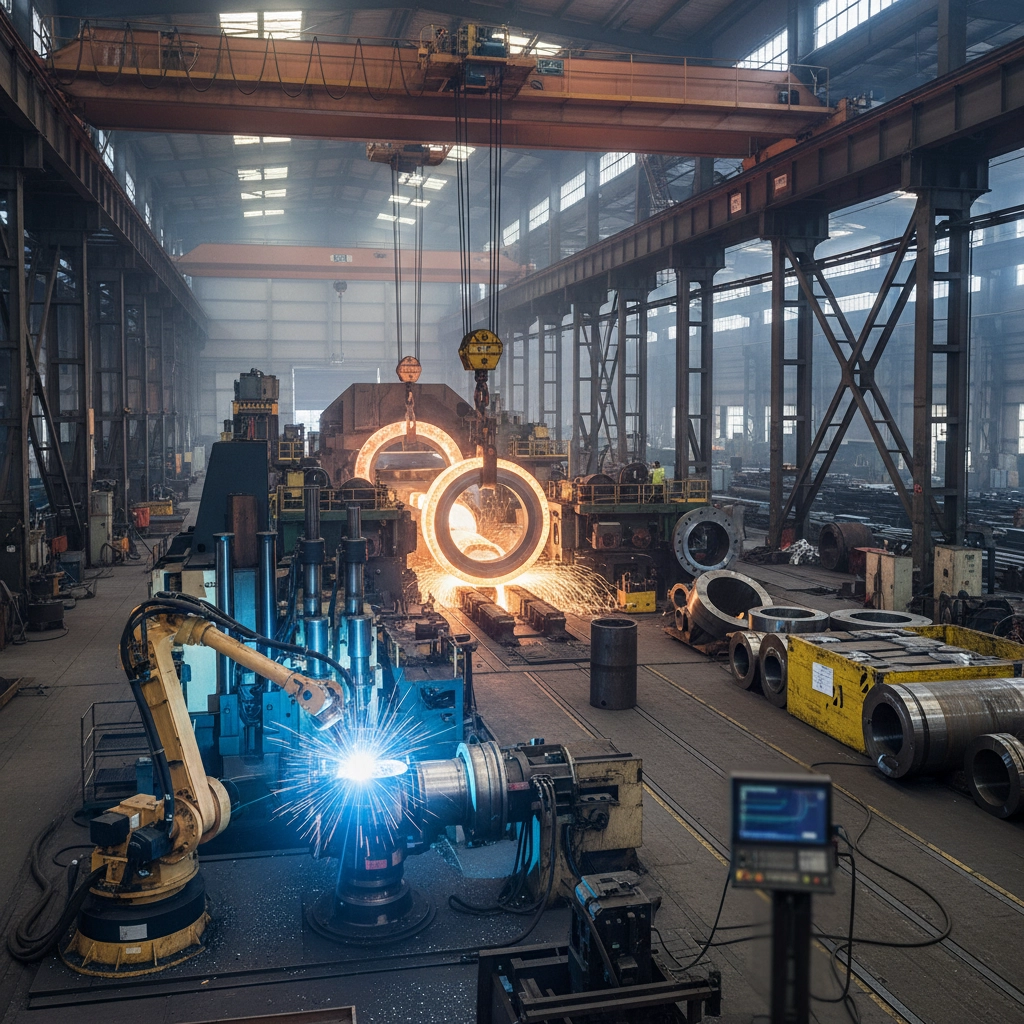
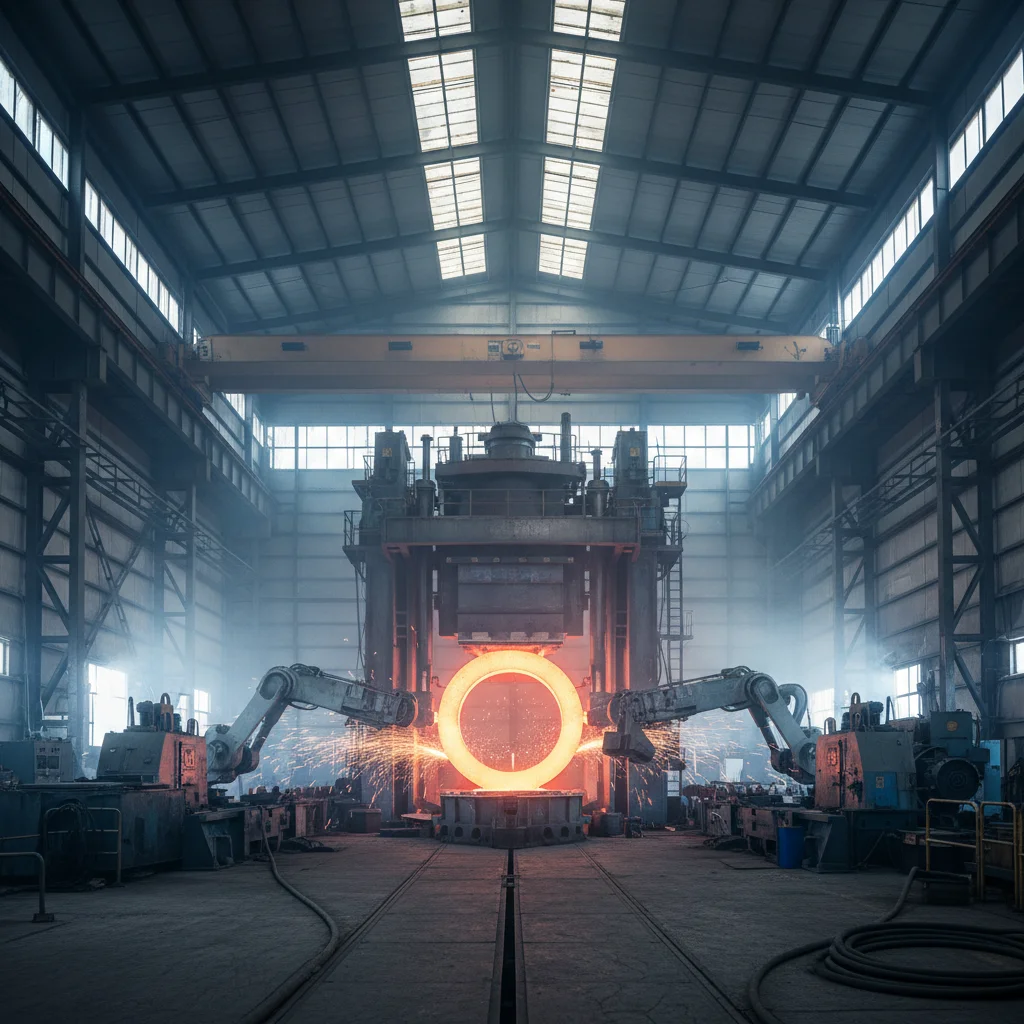
The global demand for high-pressure hydraulic systems has placed an unprecedented emphasis on the structural integrity of cylindrical components. To meet these rigorous standards, the role of a specialized large rolled ring forging factory has become essential, providing the foundational strength needed for critical industrial machinery. By utilizing seamless forging processes, manufacturers can eliminate the weaknesses inherent in welded or cast alternatives, ensuring that heavy-duty equipment operates safely under extreme stress.
In the modern manufacturing landscape, the precision and reliability of forged barrels are not merely technical preferences but safety imperatives. From large-scale press systems to heavy hydraulic equipment, the ability to maintain wall-thickness consistency and bore straightness directly impacts the lifespan and efficiency of the machinery. This requires a sophisticated combination of advanced metallurgy, precision heat treatment, and rigorous non-destructive testing to ensure zero-defect delivery for international projects.
Understanding the nuances of high-performance forgings allows engineers to optimize their designs for maximum load-bearing stability. By partnering with a reputable large rolled ring forging factory, companies can access specialized materials like 42CrMo4 and 4140, which offer the ideal balance of toughness and hardness. This synergy between material science and forging expertise ensures that every hydraulic cylinder barrel can withstand the most demanding engineering specifications.

Structural Integrity in Forged Cylinders
The primary advantage of sourcing components from a large rolled ring forging factory is the superior grain flow achieved during the forging process. Unlike casting, which can leave internal voids, or welding, which creates heat-affected zones of weakness, forging aligns the internal crystalline structure of the metal with the shape of the part. This continuous grain flow significantly enhances the fatigue strength and pressure resistance of hydraulic cylinder barrels.
For high-pressure applications, this structural continuity is paramount. When a cylinder barrel is engineered for extreme loads, the reliability of the wall section and the end faces determines the overall safety rating of the equipment. By optimizing the forging process, manufacturers ensure that the mechanical properties are uniform across the entire volume of the part, reducing the risk of catastrophic failure in critical industrial environments.
Material Science and Alloy Selection
Selecting the correct material is the first step in ensuring the longevity of a hydraulic system. High-strength alloy steels such as 42CrMo4, 20Mn5, and 4140 are the industry standards for forged barrels due to their exceptional response to heat treatment. These materials provide the necessary hardness to resist wear and the toughness to withstand sudden pressure spikes without cracking.
The chemical composition of these alloys is strictly controlled to ensure stability during quenching and tempering. A professional forging facility ensures that the raw ingot's traceability is maintained throughout the process, allowing engineers to verify that the material meets specific international grades. This traceability is critical for audits and safety certifications in aerospace, energy, and heavy manufacturing sectors.
Furthermore, the compatibility of these materials with various heat-treatment cycles allows for customized hardness profiles. Whether the application requires a hard surface for wear resistance or a more ductile core for shock absorption, the right alloy selection, combined with precise thermal processing, ensures the forged barrel meets the exact operational requirements of the client.
The Role of Precision Machining in Forging
The transition from a raw forged blank to a finished cylinder barrel requires extreme precision. A large rolled ring forging factory must provide blanks that are not only structurally sound but also optimized for subsequent machining processes like boring and honing. This reduces material waste and significantly shortens production lead times.
Bore straightness and concentricity are the most critical metrics during the machining phase. By utilizing advanced hydraulic press control during the initial forging, the factory can minimize distortion, ensuring that the final machined bore meets strict tolerances. This precision is essential for maintaining the integrity of the sealing areas, which prevent high-pressure leaks in hydraulic systems.
Many clients prefer receiving semi-finished or rough-machined parts to streamline their internal assembly. By providing options for rough-machined OD, ID, and faces, a large rolled ring forging factory allows the end-user to perform only the final precision honing, thereby optimizing the overall supply chain and reducing the workload on the client's facility.
Comparing Forged vs Fabricated Solutions
When evaluating whether to use a forged barrel or a fabricated (welded/cast) alternative, the primary consideration is the safety margin. Fabricated barrels often suffer from inconsistency in wall thickness and potential vulnerabilities at weld seams. In contrast, a solution from a large rolled ring forging factory provides a monolithic structure with no seams, drastically increasing the high-pressure reliability.
From a long-term investment perspective, forged barrels offer an extended duty cycle. Although the initial procurement cost may be higher than cast options, the reduced risk of leaks and the higher resistance to fatigue result in lower maintenance costs and less downtime. This makes forging the only logical choice for critical application-grade equipment where failure is not an option.
Performance Comparison: Forged vs Fabricated Barrel
Rigorous Inspection and Quality Standards
To ensure zero-defect delivery, a high-end large rolled ring forging factory employs a comprehensive suite of non-destructive testing (NDT). Ultrasonic Testing (UT) is utilized to detect internal flaws or voids that are invisible to the naked eye, while Magnetic Particle (MT) and Penetrant Testing (PT) ensure that the surface is free from cracks or imperfections.
Compliance with international documentation standards is equally important. Providing EN 10204 3.1 certificates, complete heat-treatment records, and detailed NDT reports ensures that the forgings can pass the most stringent international audits. This level of transparency builds trust and guarantees that every part delivered is capable of meeting the project's specific safety and performance requirements.
Global Applications of Hydraulic Forgings
The application of precision forged barrels spans across multiple heavy industries. In large press systems used for automotive stamping, the forged cylinder barrels must withstand immense pressure without any deformation. Similarly, in heavy hydraulic equipment used in mining and construction, these components are subjected to harsh environments and cyclical loading, where the fatigue strength of forged steel is essential.
Beyond earth-moving equipment, these forgings are critical in energy infrastructure. From hydroelectric dam gates to oil and gas pipeline valves, the demand for large-diameter, high-strength hollow forgings is constant. The ability of a large rolled ring forging factory to customize geometries—such as adding stepped shoulders or counterbores—allows these parts to be integrated seamlessly into complex machinery.
In regions with high industrial growth, such as East Asia and North America, the shift toward "Critical Application Grade" components has increased the reliance on forged solutions. By prioritizing structural integrity over initial cost, global operators are seeing a significant increase in equipment uptime and a decrease in emergency repair costs.
Future Trends in Forging Technology
The forging industry is currently undergoing a digital transformation. The integration of AI-driven press control allows a large rolled ring forging factory to monitor temperature and pressure in real-time, ensuring even more uniform wall thickness across the entire part. This reduces the amount of machining stock required, leading to a more sustainable process with less material waste.
Sustainability is also driving the development of new, high-performance alloys that require lower forging temperatures without sacrificing strength. These "green alloys" help reduce the carbon footprint of the manufacturing process. Additionally, the move toward automation in NDT ensures that inspection is faster and more accurate, eliminating human error in flaw detection.
As we move toward more complex hydraulic systems, the trend is shifting toward "integrated forging," where multiple features—like transition pieces and nozzle necks—are forged into a single component. This reduction in part count simplifies assembly and eliminates potential leak points, further enhancing the safety and efficiency of high-pressure systems worldwide.
Core Comparison of Hydraulic Cylinder Barrel Forging Specifications
| Material Grade |
Typical Application |
Pressure Reliability |
Machinability |
| 42CrMo4 |
Heavy Press Systems |
Excellent |
Good |
| 20Mn5 |
Industrial Hydraulics |
High |
Excellent |
| 4140 Alloy |
Mining Equipment |
Superior |
Moderate |
| Custom Grades |
Aerospace/Energy |
Maximum |
Variable |
| Carbon Steel |
Low-Pressure Cylinders |
Moderate |
Excellent |
| Heat-Treated Alloy |
Critical Load Systems |
Superior |
Good |
FAQS
Depending on the application, we typically use high-strength alloy steels such as 42CrMo4, 20Mn5, or 4140. These materials offer the ideal balance of toughness, hardness, and response to heat treatment required for high-pressure hydraulic service, ensuring the barrel can withstand extreme cyclical loads without failing.
Forged barrels provide superior mechanical properties due to the refinement of the grain structure during the forging process. This results in higher fatigue strength, better pressure resistance, and significantly lower risk of internal defects (like voids or weld cracks) compared to casting or welding, making them safer for critical applications.
We adhere to strict international standards, providing UT (Ultrasonic Testing), MT/PT, and PMI. All shipments are accompanied by EN 10204 3.1 certification, heat-treatment records, and dimensional reports to ensure complete compliance with your project specifications and international safety audits.
Yes, we offer various supply conditions. We can provide the parts as-forged, heat-treated, rough-machined (covering OD, ID, and faces), or semi-finished. This flexibility allows our clients to reduce the workload on their internal machining facilities while maintaining tight control over final tolerances.
We utilize controlled forging temperatures and precise hydraulic press movements to minimize thermal distortion. By providing adequate stock for boring and facing, we ensure that the final machined bore meets strict straightness and concentricity tolerances, which is critical for high-pressure sealing.
Absolutely. We specialize in custom hollow forgings and can incorporate specific shoulders, counterbores, and transition pieces directly into the forging or the rough-machining stage. All geometries are executed strictly according to your technical drawings to ensure a perfect fit for your assembly.
Conclusion
In summary, the selection of a high-performance hydraulic cylinder barrel depends on the synergy between advanced material selection, precise forging techniques, and rigorous quality assurance. By leveraging the capabilities of a professional large rolled ring forging factory, manufacturers can ensure their equipment possesses the structural integrity, pressure resistance, and dimensional stability required for the most demanding industrial environments.
As industry demands shift toward greater safety and sustainability, the move from fabricated to forged components represents a critical upgrade in operational reliability. We encourage engineers and procurement specialists to prioritize forged solutions for critical applications to maximize equipment lifespan and ensure the highest safety ratings. Visit our website for more information: www.yxs-forging.com