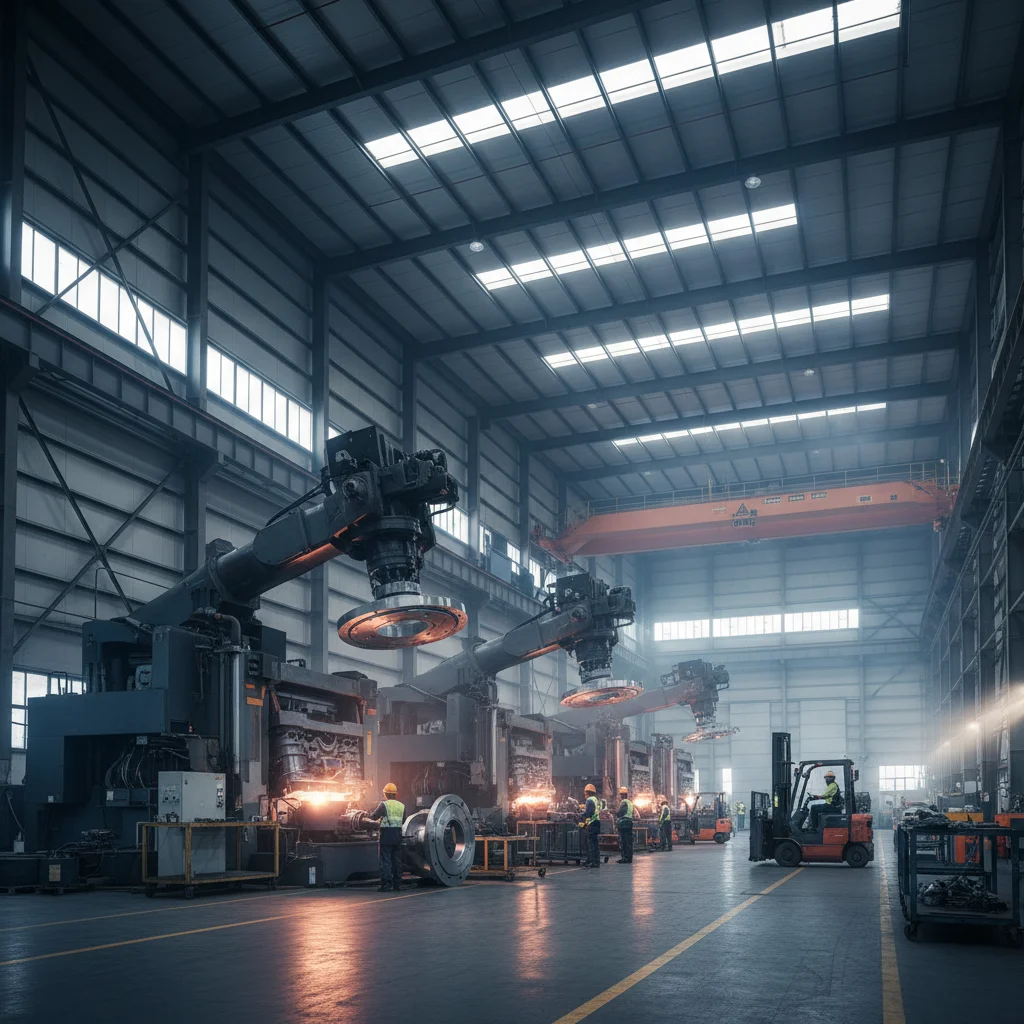
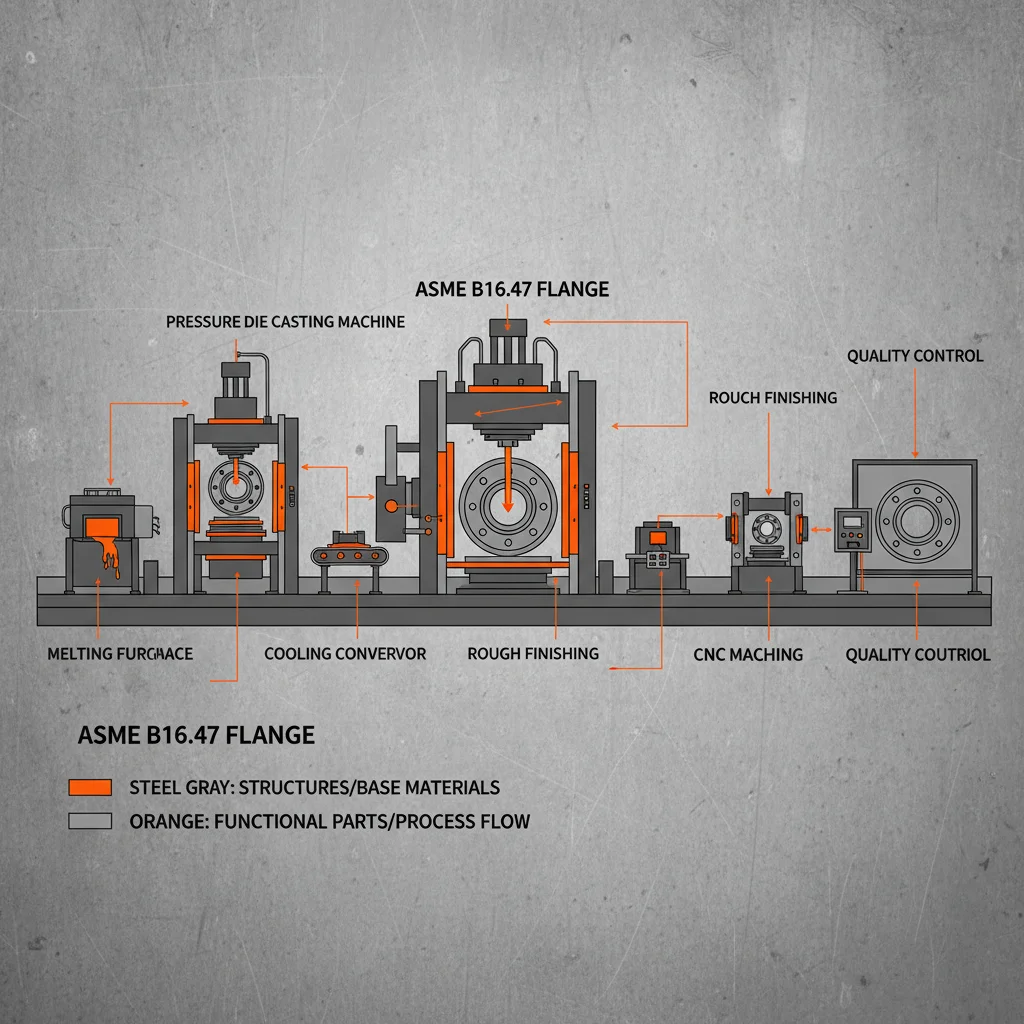
The global industrial landscape relies heavily on the structural integrity of high-pressure components, where the role of a professional large forged ring factory becomes indispensable. These facilities specialize in creating high-density, homogeneous metal components that far surpass the capabilities of standard casting or plate-cutting, ensuring that critical infrastructure remains safe under extreme stress.
From energy production to chemical processing, the demand for precision-engineered forged blanks is driven by the need to eliminate internal voids and structural weaknesses. By optimizing the grain flow of the metal, a large forged ring factory provides the foundation for components that can withstand immense pressure and temperature fluctuations without risking catastrophic failure.
When sourcing components for heat exchangers or pressure vessels, partnering with a reputable large forged ring factory ensures that your project benefits from superior material stability and rigorous NDT certification, reducing downstream machining risks and overall production timelines.

The Strategic Importance of Forged Tube Sheet Blanks
Heat Exchanger Tube Sheet Forgings are precision-engineered circular blanks designed for critical applications where dimensional stability and material homogeneity are paramount. Unlike traditional methods, the processes employed by a large forged ring factory ensure that the grain structure of the metal follows the contour of the part, which drastically increases the load-bearing capacity and resistance to fatigue.
These components serve as the primary foundation for drilling, facing, and boring operations in high-pressure environments. By utilizing forging over plate-based alternatives, engineers can guarantee a reliable base for pressure equipment projects, ensuring that the tube sheet remains stable during the intense machining required for industrial heat exchangers.
Material Versatility and Chemical Grade Standards
To meet the diverse needs of global process equipment, a large forged ring factory must offer a wide array of material grades. For standard applications, Carbon Steel (A105) provides a cost-effective and durable solution, while high-temperature environments often require Chrome-Moly alloys such as F11, F22, F91, or F92. These materials are specifically selected for their ability to maintain mechanical properties under extreme thermal stress.
For corrosive environments, Stainless Steels (A182 F304/F316) and various Duplex grades are employed. These materials offer a critical balance of strength and corrosion resistance, ensuring that the tube sheet does not degrade when exposed to aggressive chemicals or saline environments, which is a common requirement in offshore and petrochemical projects.
The integrity of these materials is backed by full heat number tracking and EN 10204 3.1 certification. This level of traceability ensures that every forged disc can be traced back to its original melt, providing the necessary documentation for regulatory compliance and safety audits in high-risk industrial sectors.
Forging vs. Plate Blanks: A Technical Comparison
One of the most critical decisions in pressure vessel design is choosing between a rolled plate blank and a product from a large forged ring factory. While plates are often more readily available, they suffer from variable material homogeneity and a higher risk of internal laminations, which can lead to unexpected failures during the drilling process.
Forged tube sheets provide a more stable and homogeneous material base, which significantly reduces distortion and warpage during machining. When a large forged ring factory produces these components, the forging route ensures better thickness consistency and usable facing stock, which is vital for maintaining the tight tolerances required in high-pressure equipment.
Furthermore, the risk of scrap is substantially minimized when using forgings. Because the material is consolidated during the forging process, the likelihood of encountering internal defects during deep-hole drilling is greatly reduced, leading to a more predictable production cycle and lower overall project risk.
Precision Machining and Dimensional Control
Achieving extreme precision in the final assembly of a heat exchanger requires optimized machining allowances. A large forged ring factory doesn't just provide raw metal; they offer a range of supply conditions, including as-forged, heat-treated, rough-machined, and semi-finished options. This allows customers to receive components that are already close to their final dimensions.
Rough-machining services are particularly valuable as they shorten downstream production cycles. By controlling the OD, ID, and faces, and providing specific drilling datums, the factory reduces the setup risks for the end user and ensures that the final boring and facing operations are performed on a stable, pre-verified surface.
Operational Efficiency Comparison: Plate vs. Forging Factory
Rigorous Inspection and NDT Coordination
Quality assurance is the cornerstone of any reputable large forged ring factory. To ensure zero-defect delivery, a comprehensive suite of Non-Destructive Testing (NDT) is employed. This includes Ultrasonic Testing (UT) to detect internal flaws, and Magnetic Particle (MT) or Penetrant Testing (PT) to identify surface discontinuities.
Beyond basic testing, Positive Material Identification (PMI) and hardness checks are performed to verify that the chemical composition and mechanical properties strictly adhere to the project specifications. Many factories also coordinate third-party witness inspections, allowing clients to verify dimensional accuracy and test results before the product leaves the facility.
Industry Applications for High-Pressure Forgings
The output of a large forged ring factory finds its way into the most demanding industrial environments. In the petrochemical sector, these forged tube sheets are essential for high-pressure heat exchangers and reactors where any failure could result in significant environmental and safety hazards. The use of Cr-Mo and Duplex alloys ensures longevity against high-temperature oxidation and corrosive fluids.
In power generation, specifically in nuclear and fossil-fuel plants, forged blocks and rings are used in condenser tube sheets and boiler internals. These applications require absolute dimensional stability to maintain a perfect seal between the tubes and the sheet, preventing leakage and optimizing thermal efficiency across the entire system.
Additionally, process equipment used in pharmaceutical and food-grade production utilizes stainless steel forgings. The ability of a large forged ring factory to provide a clean, semi-finished surface reduces the risk of contamination and ensures that the final product meets strict sanitary standards while maintaining the strength needed for industrial-scale pressure cycles.
Long-term Value and Project Lifecycle ROI
Investing in components from a large forged ring factory offers a superior return on investment when viewed across the entire project lifecycle. While the initial cost of a forging may be higher than a plate blank, the reduction in machining time and the elimination of scrap risks lead to significant cost savings during the fabrication phase.
From a maintenance perspective, the superior material homogeneity of forged components translates to a longer service life. Reduced susceptibility to stress corrosion cracking and fatigue means fewer unplanned shutdowns and lower long-term operational costs for the end user, enhancing the overall reliability of the industrial plant.
Ultimately, the value lies in the peace of mind provided by a comprehensive project dossier. With full heat-treatment records, NDT reports, and dimensional inspections, engineers can be confident that the components are "pressure-ready," ensuring that the equipment operates safely within its design limits for decades.
Comparison of Forged Tube Sheets vs. Plate-Based Alternatives
| Performance Metric |
Plate-Based Blank |
Forged Tube Sheet |
Impact on Project |
| Material Homogeneity |
Moderate/Variable |
High/Consistent |
Reduced Defect Rate |
| Dimensional Stability |
Lower (Warpage Risk) |
Excellent (Stable) |
Precision Fitment |
| Machining Cycle |
Longer (More Cleanup) |
Shorter (Optimized) |
Faster Time-to-Market |
| Pressure Suitability |
Standard |
High-Pressure Optimized |
Increased Safety Margin |
| Downstream Risk |
Higher Scrap Rate |
Minimized Risk |
Cost Predictability |
| Certification |
Standard Mill Certs |
Full Project Dossier |
Regulatory Compliance |
FAQS
Forged tube sheets, produced in a professional large forged ring factory, offer superior material homogeneity and structural stability. This significantly reduces the risk of deformation or warpage during the heavy drilling and facing processes required for heat exchangers, which is a common problem with plate-based blanks.
We provide a wide range of materials to suit different industrial needs, including Carbon Steel (A105), Stainless Steels (A182 F304/F316), Chrome-Moly alloys (F11/F22/F91/F92), and various Duplex grades, ensuring resistance to both high pressure and corrosive environments.
Yes, a large forged ring factory can supply products as forged, heat-treated, rough-machined, or semi-finished. This includes precise control of the OD, ID, and faces, as well as providing specific drilling datums to significantly shorten your downstream production cycle.
Standard inspections include Ultrasonic Testing (UT) for internal integrity, Magnetic Particle (MT) or Penetrant Testing (PT) for surface defects, Positive Material Identification (PMI), hardness checks, and comprehensive mechanical property testing.
Absolutely. We provide full project-specific dossiers including EN 10204 3.1 certifications, heat-treatment records, dimensional reports, and NDT reports to meet the strict regulatory requirements of global pressure vessel standards.
Yes, we routinely coordinate with third-party inspection agencies to witness all critical testing and verify dimensional accuracy before the product leaves our facility, ensuring absolute transparency and quality assurance for the client.
Conclusion
In summary, the transition from plate-based blanks to components sourced from a specialized large forged ring factory represents a critical upgrade in industrial safety and efficiency. By prioritizing material homogeneity, dimensional stability, and rigorous NDT coordination, companies can significantly reduce their downstream risks and ensure that their heat exchangers and pressure vessels operate with maximum reliability under the most demanding conditions.
As industrial requirements continue to evolve toward higher pressures and more corrosive environments, the adoption of advanced forging techniques becomes not just an advantage, but a necessity. We recommend that project managers integrate forged blanks early in the design phase to optimize production timelines and secure long-term asset integrity. Visit our website: www.yxs-forging.com