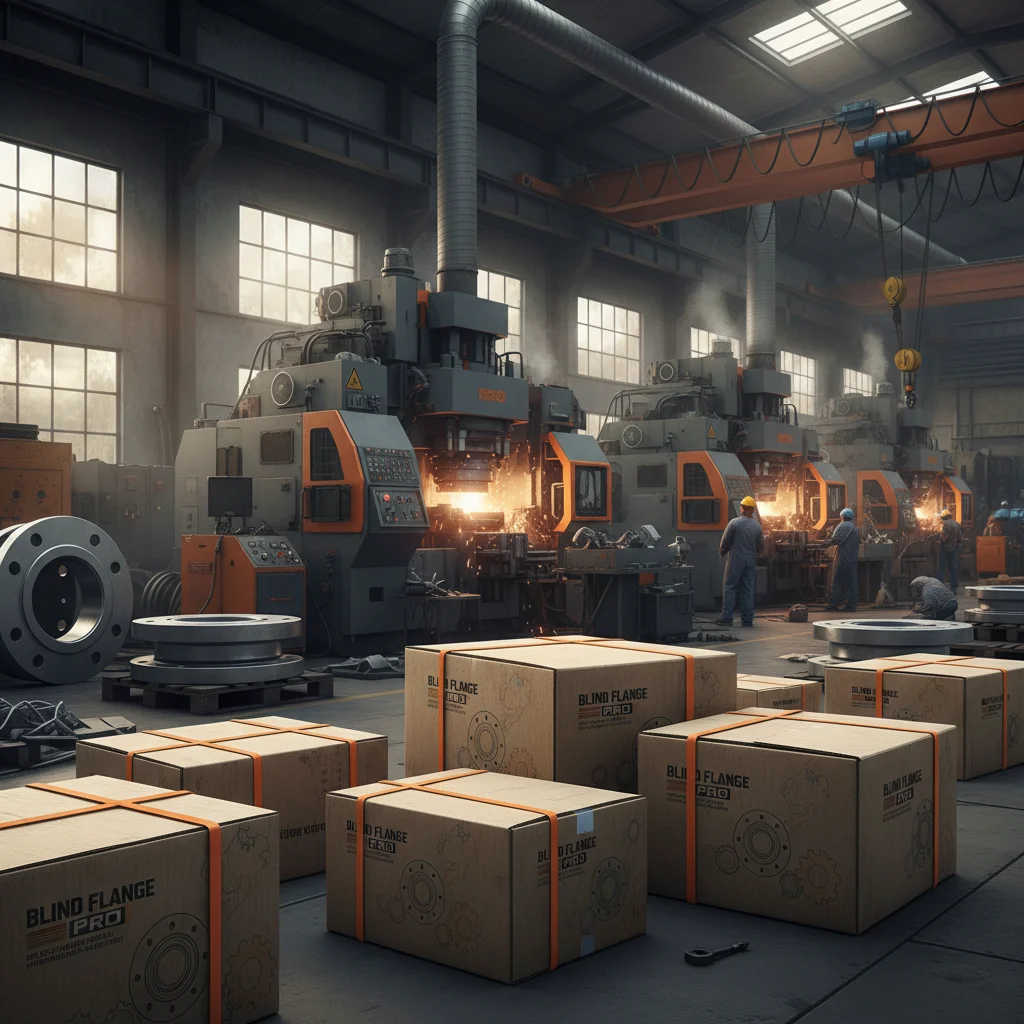
Finding a reliable hollow forgings factory is a critical decision for engineers and procurement managers in the heavy industry sector, where the structural integrity of a component can determine the safety of an entire plant. In the specialized field of metal products manufacturing, hollow forgings provide a necessary balance of lightweight design and extreme mechanical strength, essential for high-pressure environments and heavy rotating machinery.
The primary challenge for most buyers is the gap between standard catalog parts and the precise technical requirements of OEM or EPC projects. When off-the-shelf components fail to meet specific wall thickness, diameter, or material grade needs, the risk of mechanical failure or assembly misalignment increases, leading to costly downtime and potential safety hazards.
This comprehensive analysis examines the technical criteria for selecting a forging partner, the advantages of drawing-based production over standard casting, and the quality verification processes required to ensure that custom hollow cylinders and shafts meet global industrial standards.

Engineering the Core of Hollow Forgings

At its essence, a professional hollow forgings factory focuses on the optimization of grain flow. Unlike machining a hollow part from a solid block, which cuts across the metal's natural fibers, forging compresses and shapes the metal, aligning the grain structure with the geometry of the part. This process significantly enhances fatigue resistance and tensile strength, making it the only viable choice for critical components like heavy-wall cylinders and hollow shafts.
For complex geometries, the forging process must be carefully managed to avoid internal stresses. The ability to produce components with an outer diameter up to 8000mm and unit weights reaching 30 tons requires not only massive press capacity but also precise control over the deformation ratio to ensure uniformity across the wall section.
Material Versatility and Grade Selection
The operating environment of the final assembly dictates the material choice. In corrosive or high-pressure settings, carbon steel is often insufficient. Specialized factories utilize a wide spectrum of materials, including Alloy Steel for high-temperature strength, Stainless Steel for oxidation resistance, and Duplex Steel for extreme chloride environments. The chemical composition of the ingot must be strictly verified before forging begins.
Material selection also impacts the forging temperature and the subsequent heat treatment cycles. For instance, duplex steels require tighter thermal windows to prevent the formation of brittle phases, while high-alloy steels may need multi-stage tempering to achieve the target hardness and microstructure requested in the technical drawings.
Drawing-Based Production vs. Standard Cataloging
Standard forged rings follow generic size charts, which are suitable for general-purpose piping but inadequate for specialized industrial assemblies. Drawing-based production centers the entire manufacturing process around customer-provided technical specifications. This approach ensures a precision fit for OEM equipment where tolerance levels are measured in microns rather than millimeters.
By utilizing a full drawing-based route, manufacturers can optimize the near-net shape of the forging. This reduces the amount of material wasted during subsequent machining and ensures that the most stressed areas of the component possess the highest density of refined grain flow, providing maximum reliability for critical parts in rotating systems.
Key Performance Indicators for Heavy Forgings
When evaluating the output of a hollow forgings factory, several relative metrics define the quality of the part. These indices represent the normalized efficiency of the forging process compared to conventional machining or casting methods, focusing on structural reliability and dimensional accuracy.
The chart above illustrates a conceptual comparison of performance factors. Structural strength is the primary advantage of forging, while the dimensional fit provided by drawing-based processes minimizes downstream machining costs. The "Life Cycle Value" reflects the extended service life resulting from superior fatigue resistance.
Manufacturing Route and Thermal Control
The journey from raw ingot to finished hollow forging involves a strict sequence: drawing analysis, forging, heat treatment, and machining. Thermal control is perhaps the most critical stage. Advanced heat treatment management is required to achieve the target hardness and microstructure, ensuring the part does not warp or develop internal cracks during the cooling phase.
Following thermal processing, rough turning and precision machining are applied. Delivering components in "rough machined" or "finished" conditions allows the buyer to integrate the parts immediately into their assembly line. This integrated route, managed within a single facility, ensures full process traceability from the raw material certificate to the final inspection report.
Risk Mitigation in High-Stakes EPC Projects
In EPC (Engineering, Procurement, and Construction) projects, the failure of a single nozzle neck or hollow cylinder can halt a project worth millions. Risk mitigation is achieved through a strict Inspection and Test Plan (ITP). This includes multi-stage dimensional checks, ultrasonic testing to detect internal voids, and the provision of EN 10204 3.1 or 3.2 certifications.
Furthermore, logistics planning for oversized rings—some weighing up to 30 tons—is a hidden risk factor. A professional factory manages specialized packaging and shipping to ensure that the precision-machined surfaces are protected from corrosion and mechanical damage during global transit, maintaining the integrity of the part upon arrival.
Forging vs. Casting: A Technical Evaluation
Choosing between a forged hollow component and a cast alternative is a decision based on the required load-bearing capacity and the criticality of the application. While casting allows for more complex external shapes, it cannot match the internal structural integrity of forged steel.
| Comparison Metric | Standard Casting | Drawing-Based Forging | Impact on Life Cycle |
|---|---|---|---|
| Structural Strength | Moderate (Potential Porosity) | Superior (Refined Grain) | Lower failure risk |
| Dimensional Fit | Requires heavy machining | Precision fit per drawing | Reduced assembly time |
| Material Waste | High (from block) | Low (Near-net shape) | Lower raw material cost |
| Fatigue Resistance | Lower | Maximum | Extended service intervals |
| Lead Time | Mold dependent | Drawing dependent | Predictable project timeline |
| Reliability | Variable | Consistent / Auditable | Higher operational safety |
As the table demonstrates, the investment in drawing-based forging is justified by the significant reduction in life cycle costs and the elimination of risks associated with material porosity and structural instability.
Frequently Asked Questions
The main advantage is the ability to create components tailored to exact technical specifications rather than generic size charts. This ensures absolute structural integrity and a perfect fit for specialized OEM and EPC projects.
Yes, full traceability packages are provided, including EN 10204 3.1 or 3.2 certificates, which verify that the material meets all chemical and mechanical properties required by the project.
Capabilities extend to an outer diameter (OD) of up to 8000mm, a height of up to 1200mm, and a maximum unit weight of 30 tons.
Absolutely. Components can be supplied as-forged, heat-treated, rough machined, or fully finished according to the specific manufacturing route detailed in the customer's drawings.
The most common materials include carbon steel, alloy steel, stainless steel, and duplex steel, depending on whether the application requires high strength, corrosion resistance, or temperature stability.
Quality is managed through a strict Inspection and Test Plan (ITP), involving full dimensional checks, ultrasonic testing, and rigorous adherence to the provided technical drawings.
Conclusion
Selecting a hollow forgings factory is not merely a matter of finding a supplier, but of securing a technical partner capable of translating complex engineering drawings into high-performance components. By prioritizing drawing-based production, strict thermal control, and auditable quality standards, companies can significantly reduce the risk of structural failure and optimize the life cycle cost of their heavy machinery.
For those managing high-stakes industrial projects, detailed product information and technical capabilities can be reviewed at www.yxs-forging.com to ensure all application-specific requirements are met.