- Tel: +86 133 3836 0365
- Email: john@yxs-forging.com

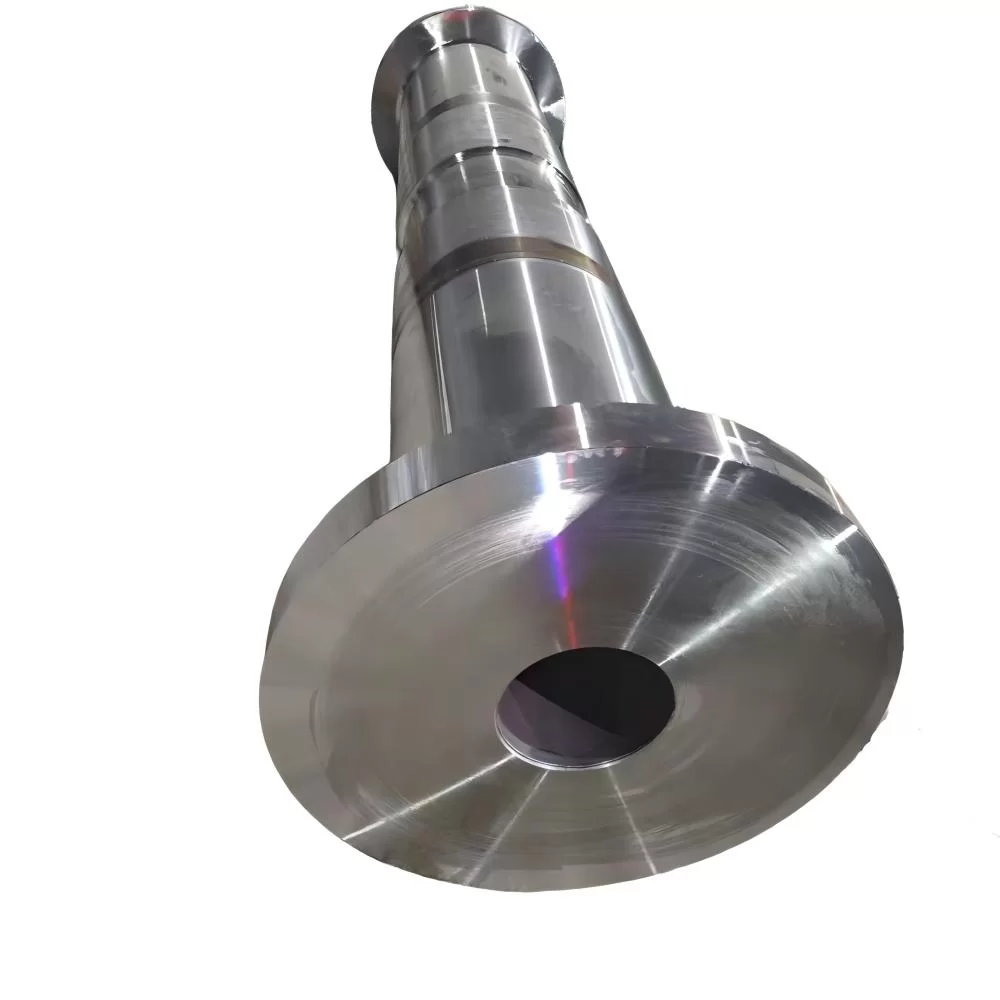
When integrating high-torque couplings, precision bearings, or heavy-duty gears, the structural integrity of the shaft transitions is the primary determinant of machinery longevity. Forged stepped shafts are specifically engineered to solve the fatigue issues associated with machining transitions from oversized solid bars. By controlling the grain flow during the forging process, these components achieve superior material continuity through shoulder transitions, effectively eliminating the stress concentrations that typically lead to premature failure in heavy-duty rotating machinery.
For procurement managers and project engineers, the choice between a bar-machined shaft and a custom forged component is a balance of lead time, waste reduction, and mechanical performance. At Yongxinsheng, we provide project-grade heavy forgings executed within a fully integrated manufacturing system, ensuring that every stepped shaft is optimized for extreme bending loads and repetitive operational stress in the most demanding industrial environments.

The fundamental difference between a forged stepped shaft and one machined from bar stock lies in the internal microstructure. In a machined shaft, the grain lines are linear and are essentially "cut" at every diameter transition. This creates a perpendicular grain termination at the shoulder, which acts as a natural site for crack initiation under cyclic loading.
In contrast, professional forging forces the metal to flow along the actual contour of the stepped geometry. This optimized grain flow ensures that the internal fibers of the alloy steel follow the curvature of the shoulder, significantly increasing the component's fatigue resistance and overall toughness. This is critical for applications such as compressor rotors and gearbox input shafts, where the transition zone bears the brunt of the mechanical stress.

Selecting the correct alloy is paramount for ensuring the shaft can withstand high torque and environmental degradation. We typically utilize high-strength alloy steels such as 42CrMo4, 34CrNiMo6, and 17CrNiMo6. These materials are selected for their excellent hardenability and strength-to-weight ratios, making them suitable for safety-critical industrial applications.
To achieve the required hardness and toughness, our shafts undergo a precision Quenched and Tempered (Q&T) cycle. This controlled thermal process ensures a uniform martensitic structure throughout the entire cross-section, even in shafts with diameters up to 1200mm. By avoiding localized soft spots, we guarantee that the journal concentricity and dimensional stability are maintained during final machining.
Our manufacturing system is certified to ISO 9001 and approved by the China Classification Society (CCS), meaning every heat treatment cycle is logged and auditable, providing full process traceability from the raw ingot to the finished stepped shaft.
Forged stepped shafts serve as the foundation for various heavy-duty rotating systems. In compressor rotors, the precision of the step transition is vital for the secure seating of seals and bearings, where any deviation in concentricity can lead to vibration and catastrophic failure. For gearbox input shafts, the ability to handle sudden torque spikes depends entirely on the integrity of the forged shoulder.
Depending on the project requirements, these components can be delivered in various conditions:
By utilizing near-net-shape forging, we reduce the volume of material to be removed, which not only lowers the cost of raw materials but also prevents the introduction of residual stresses that often occur during extreme machining of oversized solid stock.
| Evaluation Factor | Standard Bar Stock | Custom Forged Shaft | Impact on Performance |
|---|---|---|---|
| Grain Structure | Linear / Uniform | Optimized Flow Lines | Higher fatigue resistance |
| Material Waste | High (Extreme machining) | Low (Near-net shape) | Lower production cost |
| Fatigue Life | Moderate | Superior | Extended service intervals |
| Lead Time (Final) | Longer (More machining) | Shorter (Pre-shaped) | Faster project assembly |
| Shoulder Integrity | Cut Grain (Weak point) | Continuous Grain | Prevents premature failure |
For safety-critical components, internal integrity is non-negotiable. We implement a comprehensive inspection protocol that begins with the raw ingot and ends with a full dimensional report. The cornerstone of our quality control is the UT full volume inspection, which ensures that the forged block is free from internal cracks, porosity, or inclusions that could compromise the shaft under load.
Our quality suite includes:
Operating as a vertically integrated heavy equipment forging factory, Yongxinsheng manages everything from heat treatment to rough machining in-house. This eliminates the risks associated with third-party logistics and ensures that quality standards are maintained across every stage of production.
When sourcing forged stepped shafts, procurement teams should look beyond the initial unit price and consider the Total Cost of Ownership (TCO). A forged shaft reduces downstream machining costs and significantly lowers the risk of field failures. Key specifications to verify during the RFQ process include the maximum diameter (up to 1200mm in our facility) and the required heat treatment hardness specs.
It is also essential to evaluate the supplier's capability to provide full traceability. In project-grade engineering, the ability to trace a component back to the raw ingot is often a mandatory requirement for insurance and safety certifications. By partnering with a manufacturer that holds ISO 14001 and ISO 45001 certifications, buyers ensure that their supply chain adheres to international environmental and safety standards.
Ultimately, the goal is to secure a high-strength foundation that simplifies final turning, drilling, and balancing, thereby accelerating the overall project timeline while enhancing the reliability of the final machinery.
Forging aligns the internal grain structure with the shape of the shaft, providing significantly higher strength and fatigue resistance, especially at the shoulder transitions, compared to cutting across grains in bar stock.
We typically use high-strength alloy steels such as 42CrMo4, 34CrNiMo6, and 17CrNiMo6, depending on the required torque and environmental conditions of the application.
Our production capabilities extend to a maximum diameter of 1200mm, lengths up to 8000mm, and individual unit weights up to 50 tons.
Yes, all products are delivered with comprehensive documentation, including EN 10204 3.1 certificates, UT full volume reports, and mechanical property test results.
Absolutely. We can provide the shafts as-forged, heat-treated, or rough machined to specific stock allowances to facilitate your final turning and balancing sequence.
We implement a strict straightness reporting process and precision heat treatment to minimize distortion, ensuring the shaft meets the required concentricity and geometric tolerances.
Ready to optimize your machinery with high-performance forgings? Contact our engineering team today to discuss your custom stepped shaft requirements and technical specifications.