In the demanding landscape of heavy industrial manufacturing, the role of a large rolled ring forging factory is pivotal in ensuring the structural integrity of critical infrastructure. From aerospace turbines to massive wind energy components, the ability to produce seamless, high-strength rings through controlled rolling processes determines the safety and efficiency of global engineering projects. Understanding the technical nuances of these facilities allows engineers to optimize material selection and reduce long-term operational risks.
The global demand for high-performance metals has shifted toward more sustainable and precise forging methods. A modern large rolled ring forging factory leverages advanced thermomechanical processing to eliminate internal voids and refine grain structures, offering a level of reliability that casting or machining from solid blocks cannot match. This industrial capability is essential for sectors where failure is not an option, such as nuclear power and deep-sea exploration.
By integrating rigorous quality control standards and scalable production capacities, these factories bridge the gap between raw metallurgy and high-precision machinery. Whether producing Rolled Seamless Rings or Custom Machined Rings, the expertise found within a dedicated large rolled ring forging factory ensures that complex geometries are achieved without compromising the mechanical properties of the alloy, driving innovation across the global manufacturing supply chain.
The Industrial Significance of a Large Rolled Ring forging factory
A large rolled ring forging factory serves as the backbone for heavy-duty mechanical assemblies. Unlike traditional forging, ring rolling involves the gradual reduction of a pre-formed "donut" of metal, which creates a continuous grain flow following the circumference of the part. This unique metallurgical structure is what grants forged rings their exceptional resistance to fatigue and high-pressure environments.
The global relevance of these facilities is underscored by the rise of renewable energy and aerospace expansion. ISO standards and ASTM specifications dictate the precision required, and only a factory equipped with heavy-duty rolling mills can meet these stringent tolerances. By reducing material waste and increasing part strength, these factories enable the creation of safer, more durable components for the world's most challenging environments.
Core Technical Processes in Ring Rolling
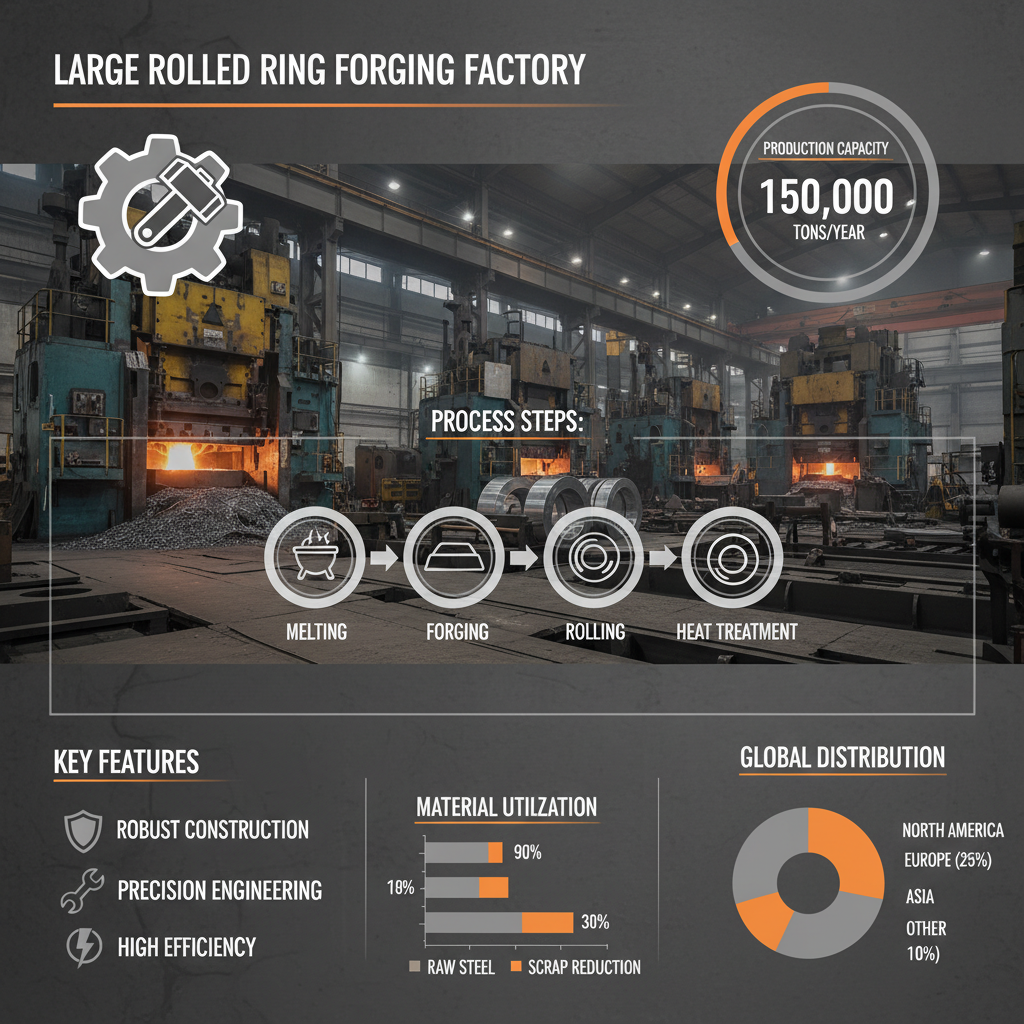
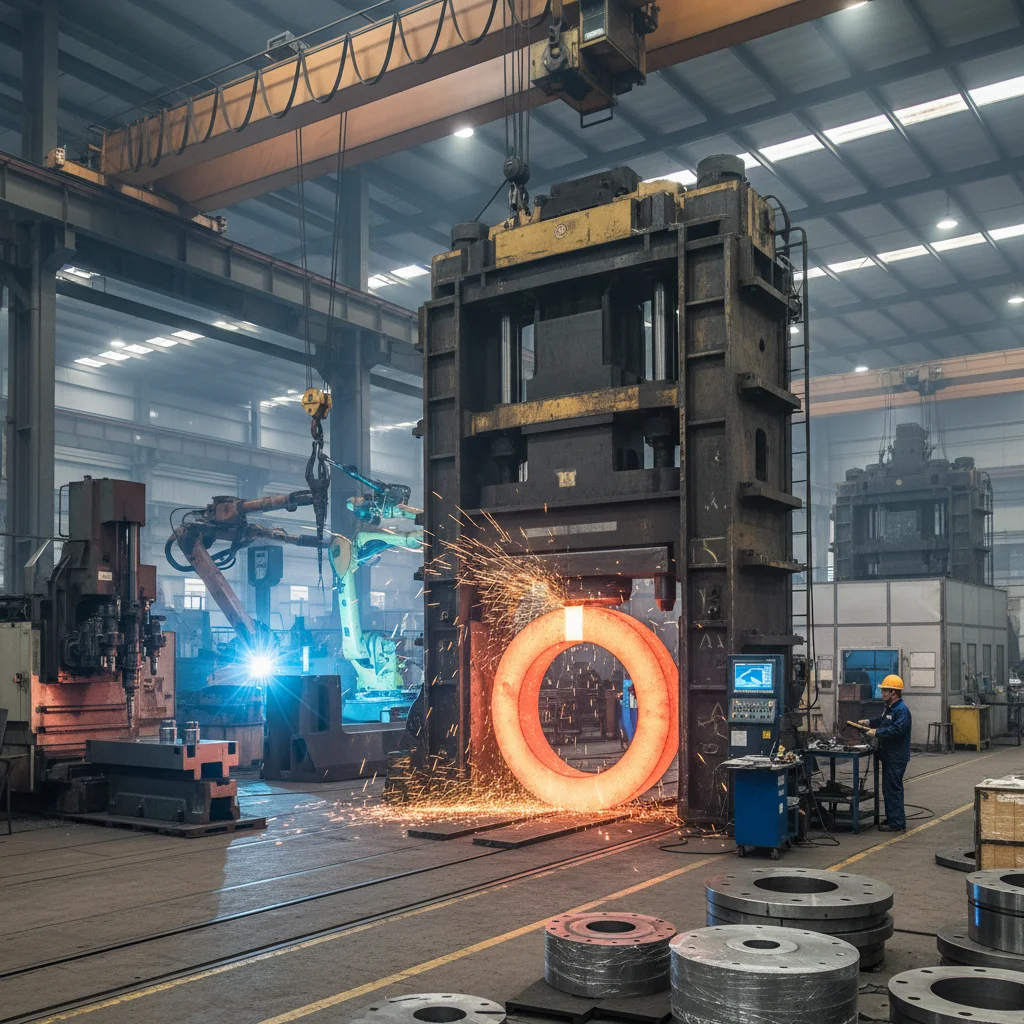
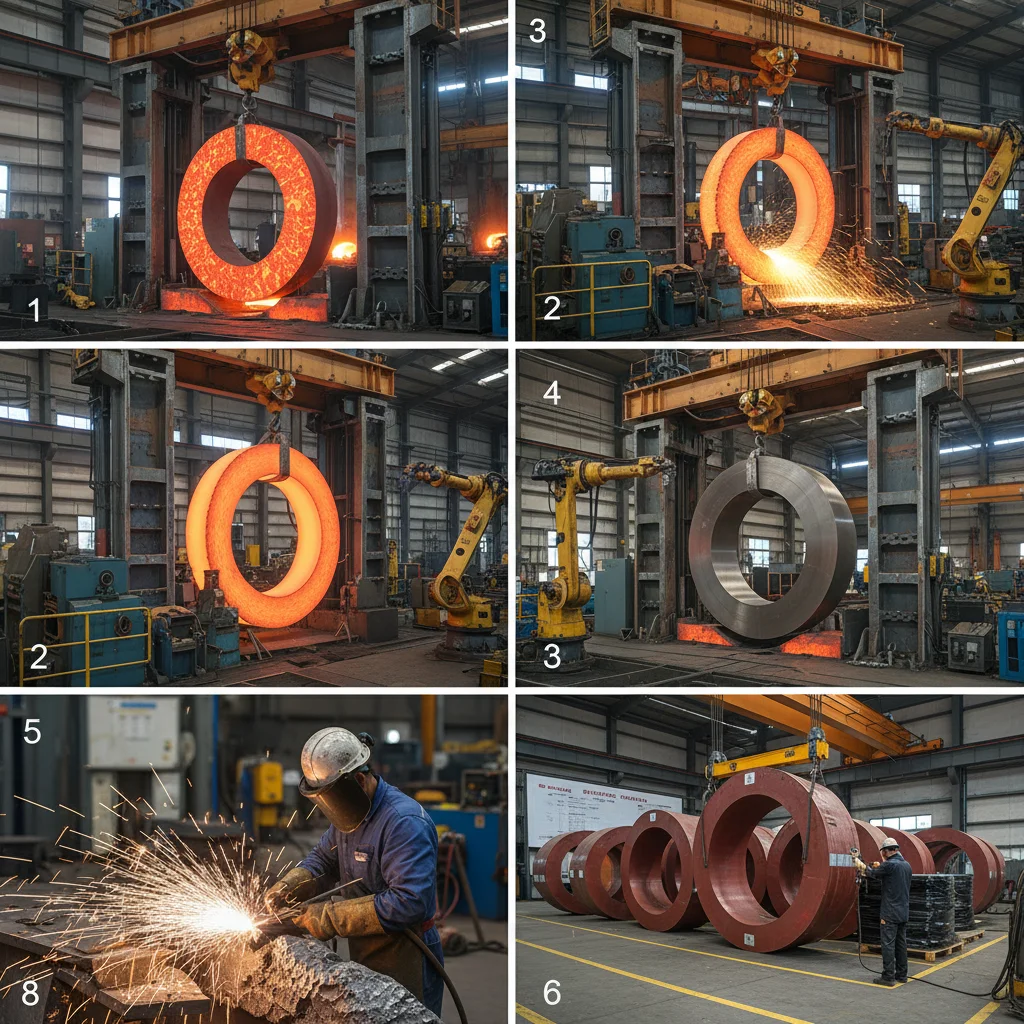
The operational workflow within a large rolled ring forging factory begins with the creation of a forged bloom, which is then pierced to create a starting ring. This preform is heated to precise temperatures—often using induction or gas furnaces—to ensure the metal is plastic enough for deformation without developing surface cracks or internal stresses.
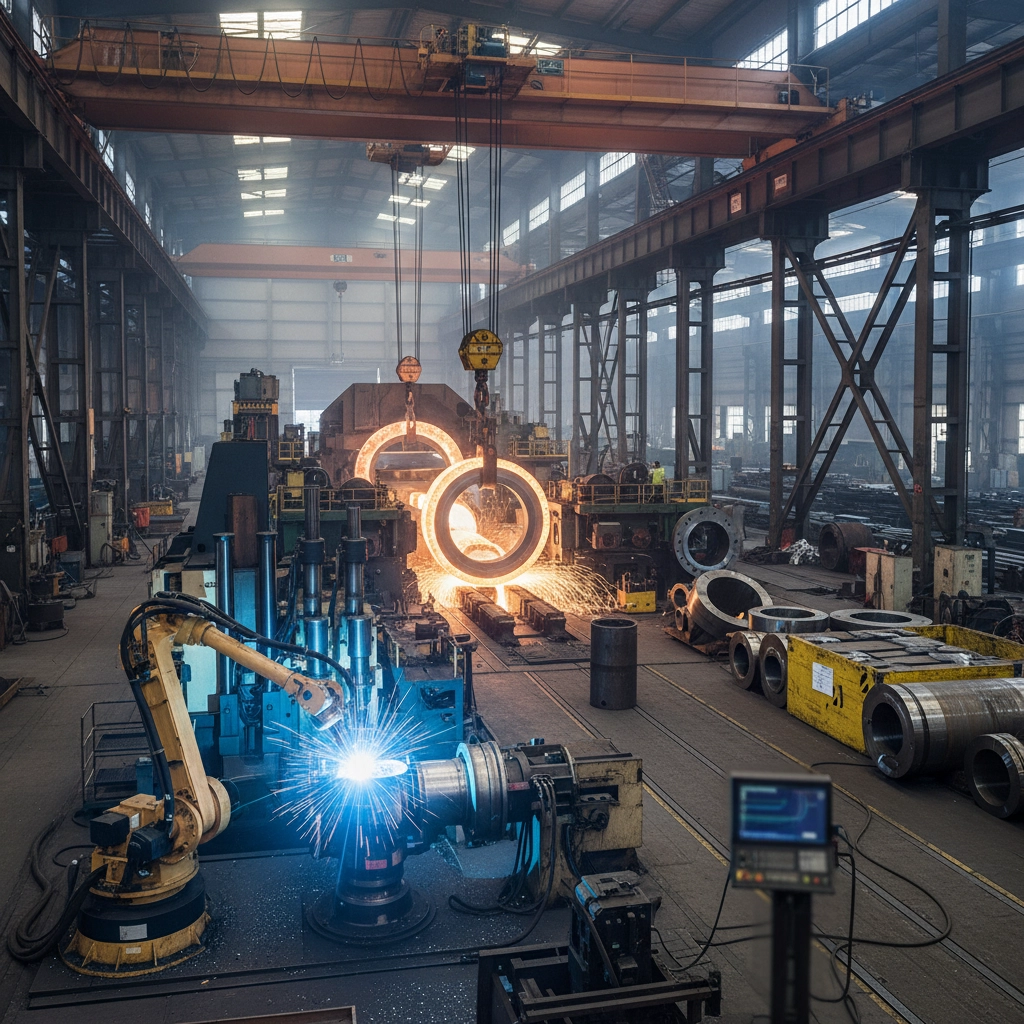
Once heated, the ring is placed between a drive roll and an idler roll. The radial pressure applied by these rolls reduces the wall thickness while increasing the diameter. This process, known as seamless rolling, is critical because it eliminates the need for welding, which is often the weakest point in a ring. The precision of this phase determines the final concentricity and uniformity of the product.
Following the rolling phase, the rings undergo controlled cooling or heat treatment, such as quenching and tempering. This ensures that the final product, whether it be a Gear Ring Blank or a Heavy Wall Cylinder, possesses the exact hardness and ductility required for its specific industrial application, effectively balancing strength with toughness.
Key Quality Factors for Forged Ring Integrity
Material purity is the first pillar of quality in any large rolled ring forging factory. The use of vacuum-degassed steels ensures that impurities like oxygen and nitrogen are minimized, preventing the formation of inclusions that could lead to catastrophic failure under stress.
Grain flow optimization is where a large rolled ring forging factory truly differentiates itself from casting shops. By mechanically forcing the metal to flow in a circular path, the factory creates a "fiber" structure that is naturally resistant to radial cracking, which is essential for components like Tube Sheet Forgings and Nozzle Neck Forgings.
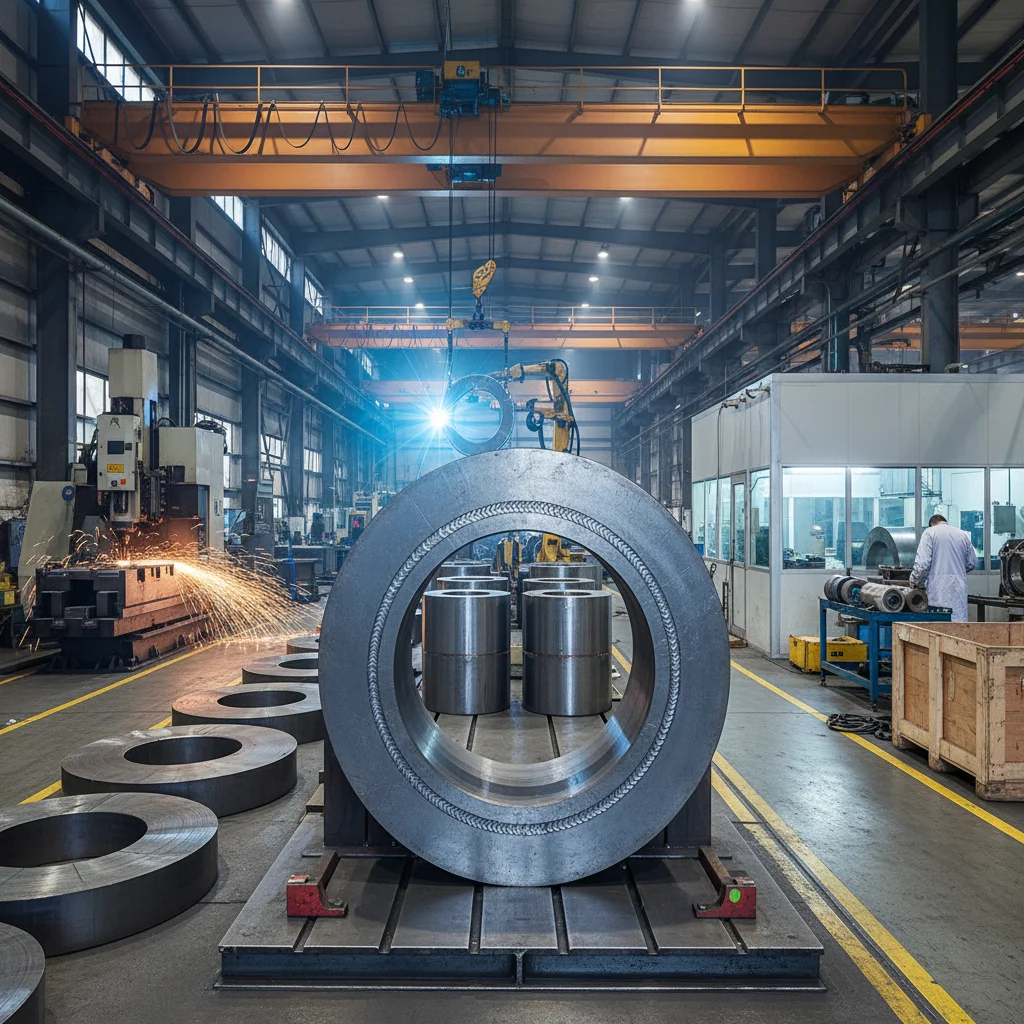
Finally, dimensional tolerance and surface finish are validated through advanced NDT (Non-Destructive Testing). Ultrasonic testing and magnetic particle inspection are standard protocols in a professional large rolled ring forging factory to guarantee that no internal fissures exist before the ring moves to the final machining stage.
Comparative Performance of Ring Forging Methods
Choosing the right production method is critical for cost-efficiency and performance. In a large rolled ring forging factory, engineers often compare seamless rolling against open-die forging or casting. Seamless rolling typically offers the best strength-to-weight ratio and the lowest material waste, making it the gold standard for high-pressure applications.
While open-die forging is suitable for very thick, low-diameter rings, the seamless process allows for the production of thinner walls with superior uniformity. This efficiency reduces the amount of machining required, lowering the overall cost per unit and shortening lead times for complex orders like Custom Hollow Forgings.
Performance Metrics Across Forging Techniques
Global Applications and Sector Use Cases
The products leaving a large rolled ring forging factory are found in the most critical systems worldwide. In the energy sector, specifically wind power, massive forged rings serve as the main bearings for turbine hubs, enduring millions of cycles of stress in harsh offshore environments. Their reliability is non-negotiable, as a single failure can lead to millions of dollars in losses.
Beyond energy, the aerospace and defense industries rely on these factories for jet engine casings and structural aircraft frames. In remote industrial zones, such as mining operations in Australia or oil rigs in the North Sea, the heavy-duty rings used in crushers and pressure vessels are the only components capable of resisting extreme corrosion and mechanical wear over decades of service.
Long-Term Value and Sustainability Benefits
Investing in components from a certified large rolled ring forging factory provides tangible long-term financial value. Because forged rings have superior fatigue strength, the maintenance intervals for machinery are significantly extended. This reduction in downtime translates directly into higher operational profitability for the end-user.
From a sustainability perspective, seamless rolling is far more eco-friendly than machining a ring from a solid forged block. The "buy-to-fly" ratio—the weight of the raw material compared to the final part—is drastically lower in a large rolled ring forging factory, meaning less energy is spent on raw material extraction and less scrap is generated during production.
Furthermore, the longevity of these parts contributes to a circular economy. High-quality forged rings can often be refurbished or repurposed rather than scrapped, reducing the overall carbon footprint of heavy industrial infrastructure and promoting a more responsible approach to metal consumption.
Future Trends in Forging Automation and Materials
The next generation of the large rolled ring forging factory is being defined by Digital Twin technology and AI-driven process control. By simulating the thermal and mechanical stresses in a virtual environment before the actual roll begins, factories can predict potential defects and adjust parameters in real-time, achieving near-zero waste.
Innovation in materials is also accelerating, with the introduction of superalloys and titanium grades that can withstand extreme temperatures in hypersonic flight or next-gen nuclear reactors. These materials require specialized heating and rolling equipment, pushing the technical boundaries of what a large rolled ring forging factory can produce.
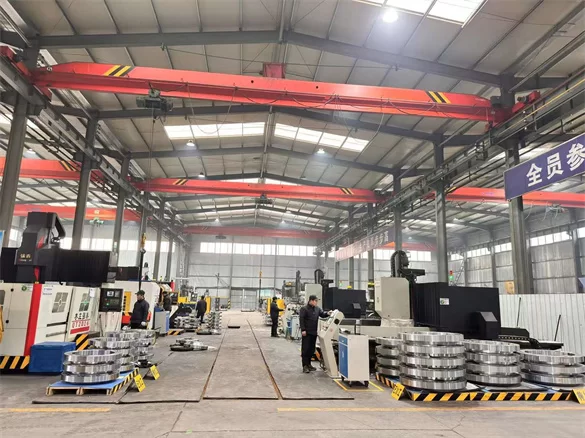
Automation in the finishing stages—such as robotic ultrasonic inspection and CNC precision machining—is ensuring that "Custom Machined Rings" are delivered with tolerances measured in microns. This integration of forging and precision machining under one roof is becoming the industry standard for efficiency.
Analysis of Future Technology Integration in Ring Forging
| Technology Area | Implementation Level | Impact on Production | Efficiency Gain |
|---|
| AI Thermal Control | Moderate | Reduced Surface Defects | 8/10 |
| Digital Twin Modeling | High | Optimal Grain Flow | 9/10 |
| Robotic NDT Scanning | Very High | Faster Quality Assurance | 10/10 |
| Superalloy Rolling | Low | Extreme Temp Resistance | 7/10 |
| Smart Logistics (IoT) | Moderate | Lead Time Reduction | 6/10 |
| Hybrid Forging-CNC | High | Precision Geometry | 9/10 |
FAQS
A seamless ring produced in a large rolled ring forging factory has a continuous grain flow that follows the circumference of the part. This eliminates the "heat-affected zone" and the inherent weak points associated with welds, resulting in significantly higher fatigue resistance and the ability to withstand much higher internal pressures without the risk of leakage or rupture.
Quality is ensured through a multi-stage process: starting with vacuum-degassed raw materials to remove impurities, followed by precise temperature monitoring during rolling to prevent cracks, and concluding with Non-Destructive Testing (NDT) including ultrasonic and magnetic particle inspections to verify internal soundness.
Yes, a professional large rolled ring forging factory specializes in "Custom Forgings." They can work with a wide array of alloys, including carbon steel, stainless steel, and nickel-based superalloys, tailoring the ring's diameter, wall thickness, and mechanical properties to the specific needs of the client's engineering design.
The primary clients include the aerospace industry (jet engines), the energy sector (wind turbine bearings, nuclear pressure vessels), oil and gas (flanges, valve bodies), and heavy machinery (industrial crushers and gear blanks). Any industry requiring high-strength, circular components typically relies on these facilities.
Lead times vary based on the material and complexity. Standard sizes may take several weeks, while highly specialized custom alloys or extremely large diameters may take several months due to the time required for raw material procurement, controlled rolling, and the mandatory heat treatment and testing cycles.
Absolutely. Ring rolling significantly reduces the "buy-to-fly" ratio by forming the ring close to its final shape. This minimizes the amount of expensive metal that must be machined away as scrap, reducing both material costs and the time spent on the CNC machine, making it the most economic choice for large-diameter parts.
Conclusion
The operational excellence of a large rolled ring forging factory is fundamental to the safety and progress of modern heavy industry. By combining advanced thermomechanical processing with rigorous quality assurance, these facilities provide the essential components—from Rolled Seamless Rings to Custom Machined Rings—that allow our energy, aerospace, and infrastructure systems to operate under extreme conditions. The shift toward seamless production not only enhances part reliability but also drives environmental sustainability by drastically reducing material waste.
Looking forward, the integration of AI and digital modeling will further refine the precision of forged components, enabling the use of even more advanced materials for the next generation of engineering marvels. For companies seeking the optimal balance of strength, longevity, and cost-efficiency, partnering with an experienced forging specialist is the most strategic path forward. To explore high-precision forging solutions for your next project, visit our website: www.yxs-forging.com.