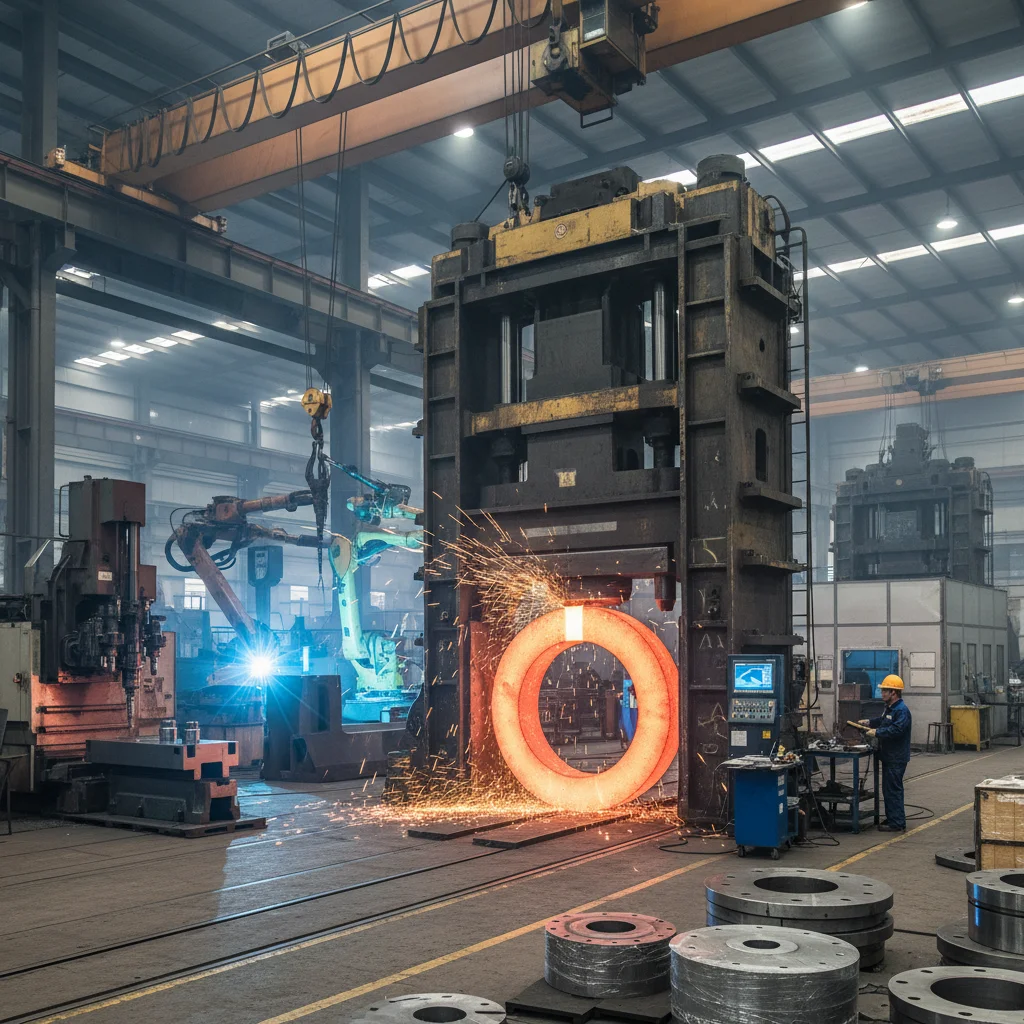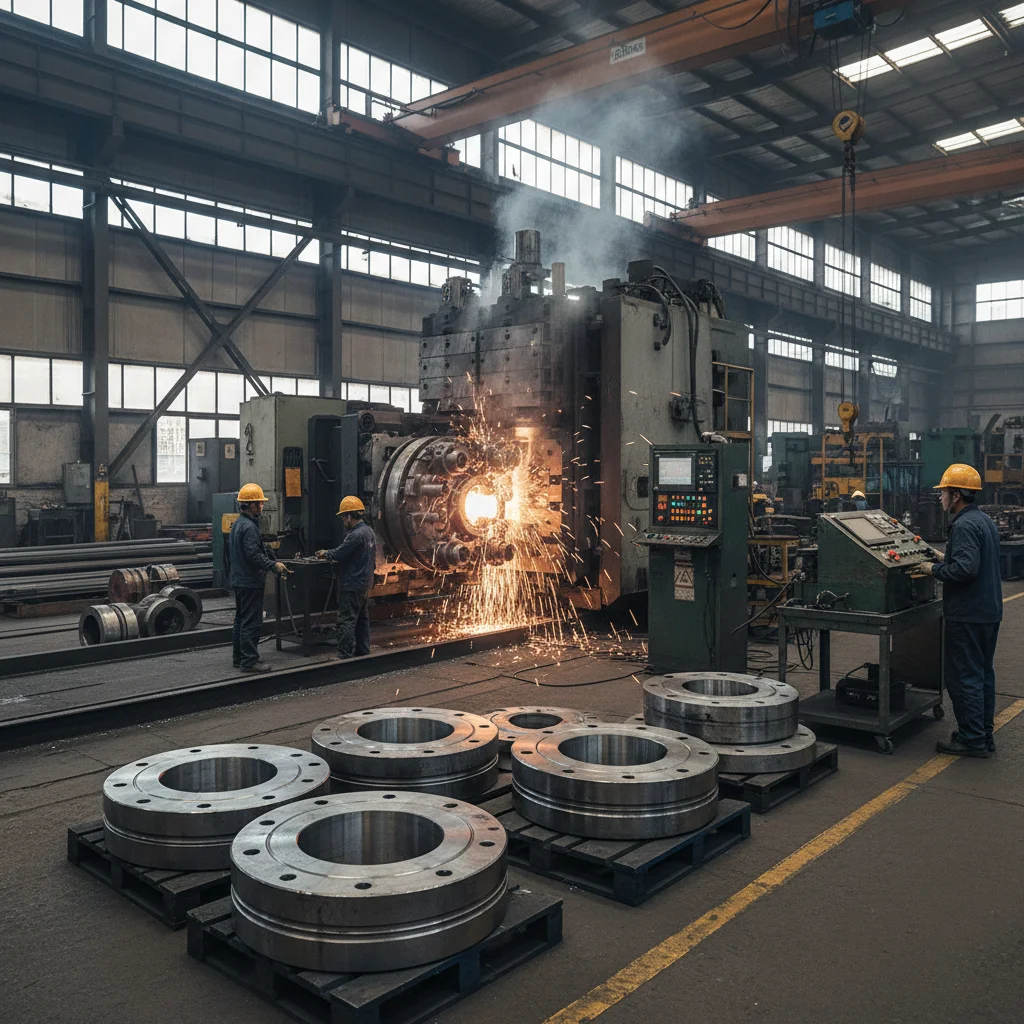
Selecting a reliable large diameter shaft factory is a critical decision for engineers designing heavy-duty machinery where structural failure is not an option. When standard bar stock cannot meet the torque or bending load requirements of a specific project, custom forged shafts become the primary technical solution.
The transition from standard components to custom large-scale forgings involves a complex interplay of material science, grain flow optimization, and precision machining. For components with diameters reaching up to 1500mm and lengths up to 10,000mm, the manufacturing route directly impacts the fatigue life and reliability of the final assembly.
This technical guide examines the criteria for evaluating forging facilities, the advantages of forged preforms over cast or rolled alternatives, and the procurement logic required to secure project-grade heavy shafts for industrial applications.

Technical Superiority of Forged Large Diameter Shafts

Unlike rolled bars, which often exhibit inconsistent internal structures in very large diameters, a specialized forging process ensures a refined grain structure that follows the contour of the part. This directional alignment is essential for shafts subjected to intense torsional stress and repeated bending cycles.
The use of a forged preform allows for the strategic arrangement of material, reducing the volume of metal that must be removed during the machining of journals and steps. This not only minimizes material waste but also prevents the introduction of internal stresses that typically occur when machining deeply into a solid rolled block.
For projects requiring diameters up to 1500mm, the forge's ability to control the temperature and deformation rate determines the absence of internal voids and cracks, providing a level of material continuity that is unattainable through other manufacturing methods.
Critical Engineering Parameters for Custom Shaft Forgings
Custom shaft design focuses on the "stepped" geometry, where specific diameters and shoulder positions are defined to accommodate bearings, gears, and couplings. The precision of these shoulders is vital for the axial alignment of the entire machinery train.
Material selection varies based on the environment; carbon steels are used for general structural strength, while alloy and stainless steels are deployed for corrosion resistance or extreme temperature stability. The supply condition—whether as-forged, heat-treated, or rough machined—must be aligned with the downstream turning and balancing sequence.
Rigorous inspection protocols, including EN 10204 3.1/3.2 certification and full dimensional verification, ensure that the forging matches the engineering drawing precisely before it enters the final machining stage.
High-Load Application Scenarios and Industrial Use Cases
Large diameter shafts serve as the backbone for some of the world's most demanding industrial equipment. In the energy sector, main shafts for turbines and generators require absolute concentricity and high fatigue resistance to operate at constant high speeds without vibration.
Heavy mining equipment, such as crushers and conveyors, utilizes stepped shaft forgings to support massive loads. These components must withstand sudden impact loads and high torque, making the structural integrity of a forged block far superior to a welded assembly.
In marine engineering, propeller shafts and rudder stocks rely on the material continuity provided by a large diameter shaft factory to prevent stress corrosion cracking in saltwater environments, where any internal flaw could lead to catastrophic failure.
Comparative Analysis of Forging vs. Conventional Bar Stock
When comparing forged shafts to standard bar stock, the primary advantage lies in the "near-net-shape" capability. Forging allows the manufacturer to create a preform that closely resembles the final stepped design, significantly reducing the machining hours required.
Beyond efficiency, the mechanical properties differ significantly. Forging closes internal porosity and refines the crystalline structure, which leads to higher yield strength and better impact toughness compared to the relatively static structure of rolled bars.
large diameter shaft factory Performance Metrics
As shown in the data, forged components typically exhibit higher fatigue resistance and material utilization rates, making them the only viable choice for safety-critical applications where the shaft diameter exceeds standard commercial availability.
Procurement Strategies for Project-Grade Forging Facilities
Procuring a heavy shaft is not a simple transaction but a project-based execution. The buyer must evaluate the factory's integrated capabilities, specifically whether they own the heat treatment and machining facilities or outsource them, as this affects traceability.
A critical procurement factor is the "Inspection and Test Plan" (ITP). A professional factory will provide a comprehensive traceability package, including raw material heat numbers and ultrasonic testing reports, ensuring no internal defects exist in the large-diameter sections.
Furthermore, the ability to deliver "semi-finished" or "rough machined" products allows the customer to perform final precision grinding in a controlled environment, ensuring that the final tolerances are met exactly as per the equipment's operational requirements.
Evolution of Heavy Forging and Precision Heat Treatment
The industry is shifting toward more controlled and auditable manufacturing systems. Modern forging facilities now integrate digital monitoring of forging temperatures and press loads to ensure that every shaft in a batch is produced under identical conditions.
Advanced heat treatment cycles, including controlled quenching and tempering, are now used to eliminate residual stresses in shafts exceeding 1000mm in diameter. This prevents the shaft from warping during the final machining process, which is a common failure point in lower-tier facilities.
Future developments may involve the use of new alloy compositions and simulation software that predicts grain flow before the first hammer blow, further increasing the reliability of custom heavy shaft forgings.
Evaluation Framework for Selecting a Forging Partner
When comparing potential suppliers, buyers should move beyond price and focus on technical capability and certification. A factory approved by organizations like the China Classification Society (CCS) indicates a level of quality control suitable for safety-critical applications.
The following framework highlights the differences between basic forging shops and integrated heavy forging manufacturers when dealing with large diameter shafts.
| Evaluation Factor | Standard Forging Shop | Integrated Heavy Factory | Project Impact |
|---|---|---|---|
| Max Diameter | Up to 500mm | Up to 1500mm | Design Scalability |
| Grain Flow Control | Random / Limited | Contoured / Optimized | Fatigue Life |
| Heat Treatment | Outsourced | In-house Controlled | Dimensional Stability |
| Traceability | Basic Mill Certs | Full Process ITP | Audit Compliance |
| Machining Scope | Rough Turning | Rough to Semi-finished | Downstream Cost |
| Certification | ISO 9001 only | ISO + CCS / Special Eq | Regulatory Approval |
Ultimately, the choice depends on the risk profile of the project. For non-critical components, a standard shop may suffice, but for main drive shafts and heavy-duty equipment, an integrated manufacturer providing full traceability is the only professional choice.
Frequently Asked Questions
Conclusion
The reliability of a heavy machinery system is only as strong as its most critical shaft. By partnering with a specialized large diameter shaft factory that controls the entire process—from the initial forging preform to the final heat treatment and rough machining—engineers can ensure maximum operational life and safety.
For organizations evaluating the technical requirements of their next project, reviewing the integrated manufacturing capabilities and certification standards available through www.yxs-forging.com can provide the necessary clarity for a secure procurement decision.