The operational success of heavy industries—from aerospace to wind energy—rests upon the structural integrity of their most critical components. A professional large forged ring factory provides the essential foundation for these sectors by producing seamless, high-strength rings that can withstand extreme pressures and rotational stresses. Understanding the nuances of ring forging is not merely a technical requirement but a strategic advantage for engineers seeking to optimize machine longevity and safety.
Globally, the demand for precision-engineered large-scale components has surged as infrastructure projects grow in complexity and scale. Whether it is for massive turbine housings or industrial pressure vessels, the ability of a large forged ring factory to control grain flow and eliminate internal voids is what separates a reliable part from a potential point of failure. This mastery of metallurgy ensures that critical assets remain operational under the most grueling conditions.
By integrating advanced thermal processing and precise mechanical deformation, modern forging facilities are bridging the gap between raw material potential and high-performance engineering. For procurement managers and technical leads, partnering with a reputable large forged ring factory means securing a supply chain that prioritizes E-E-A-T (Experience, Expertise, Authoritativeness, and Trustworthiness), ensuring that every forged disc or ring meets rigorous ISO and ASTM international standards.
The Industrial Significance of a Large Forged Ring Factory
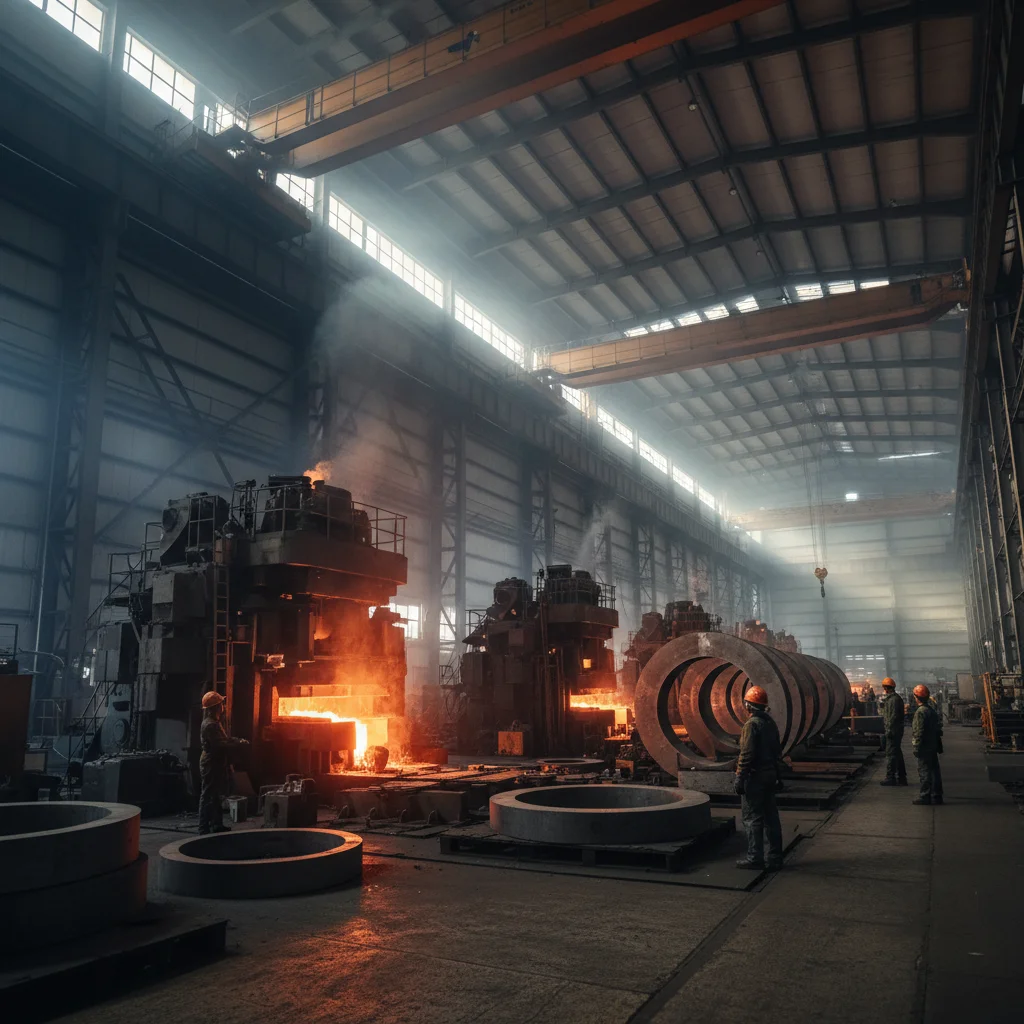
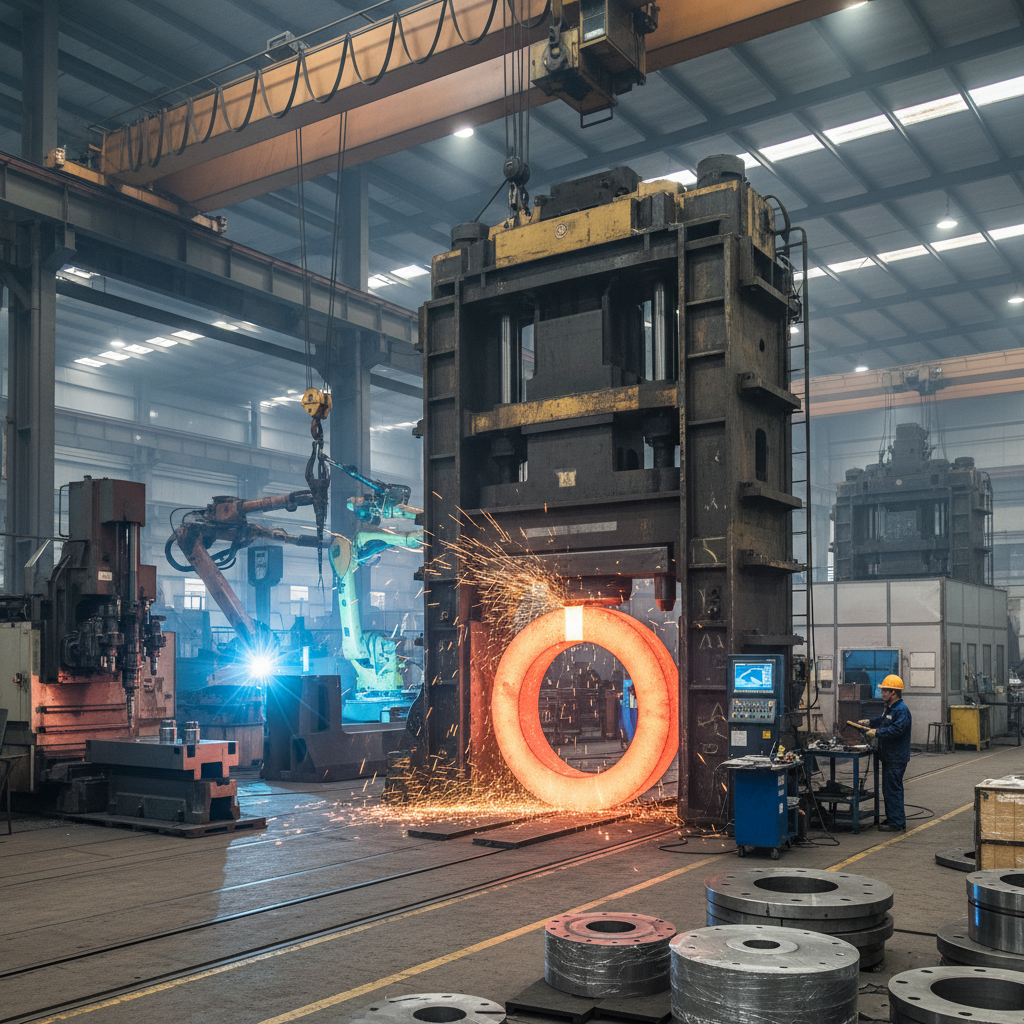
A large forged ring factory serves as the heartbeat of heavy manufacturing, converting massive billets of steel or alloy into high-precision rings. The significance lies in the "forging" process itself, which mechanically compresses the metal, refining its grain structure and increasing its fatigue resistance far beyond what casting can offer. This is critical for components like Gear Ring Blanks and Heavy Wall Cylinders.
In a global economy that demands higher efficiency and lower downtime, the role of these factories has evolved. They no longer just provide "parts" but offer engineered solutions. By utilizing advanced seamless rolling techniques, a large forged ring factory can produce components with exceptional concentricity and mechanical properties, reducing the amount of machining required and minimizing material waste.
Defining the Capabilities of Modern Ring Forging
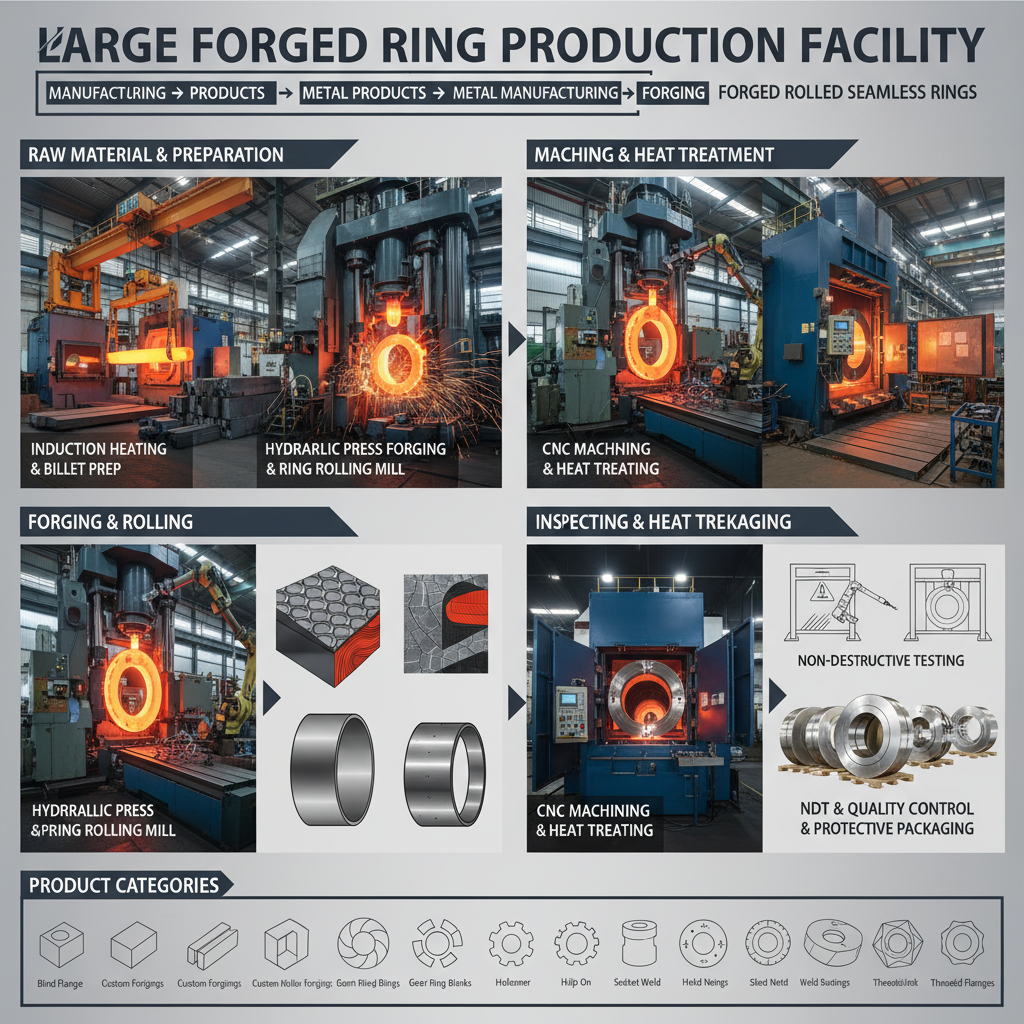
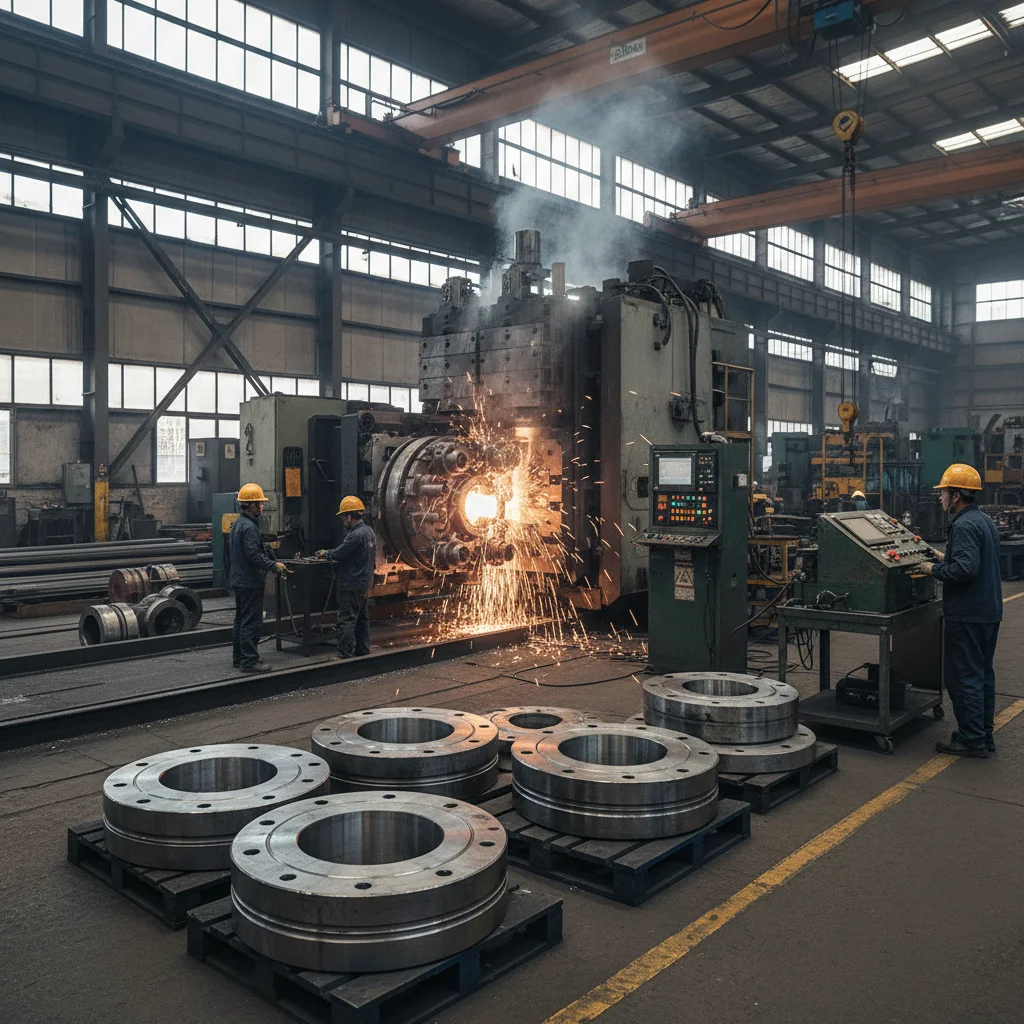
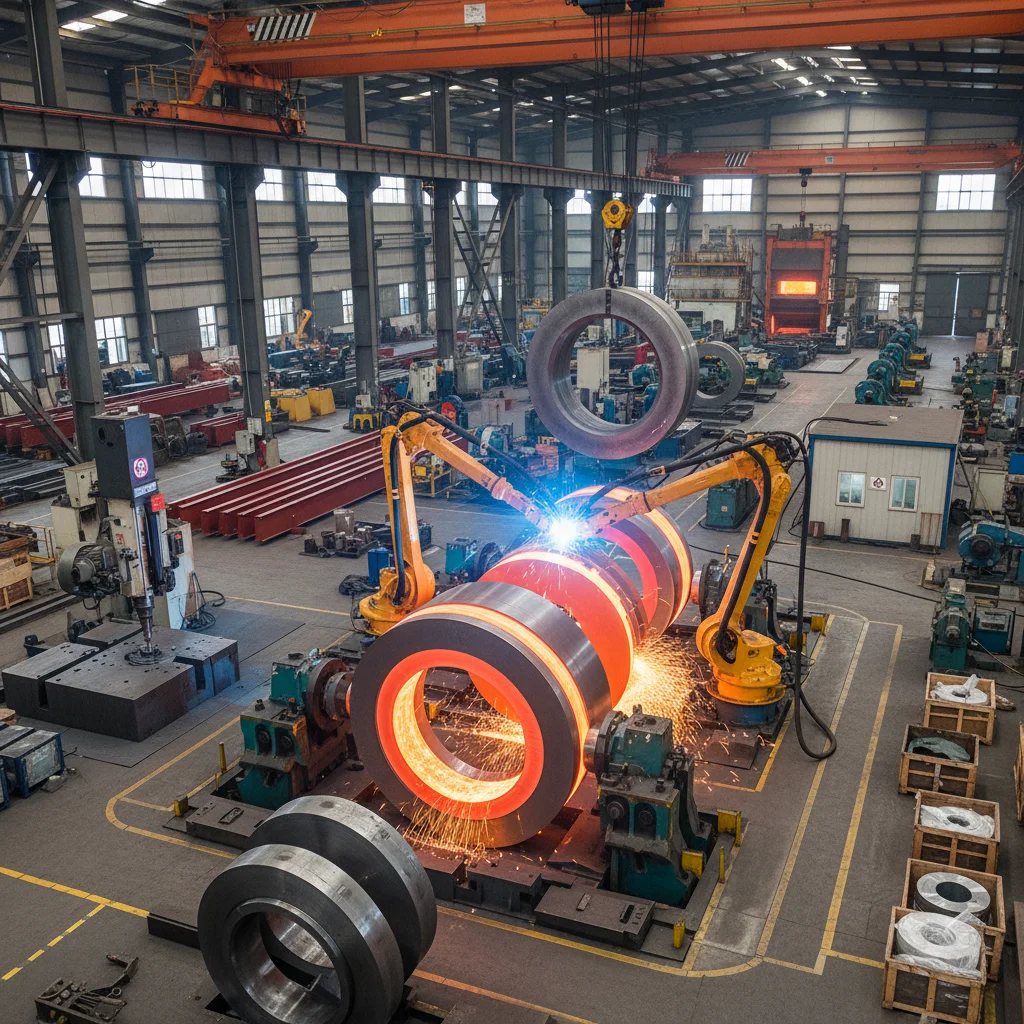
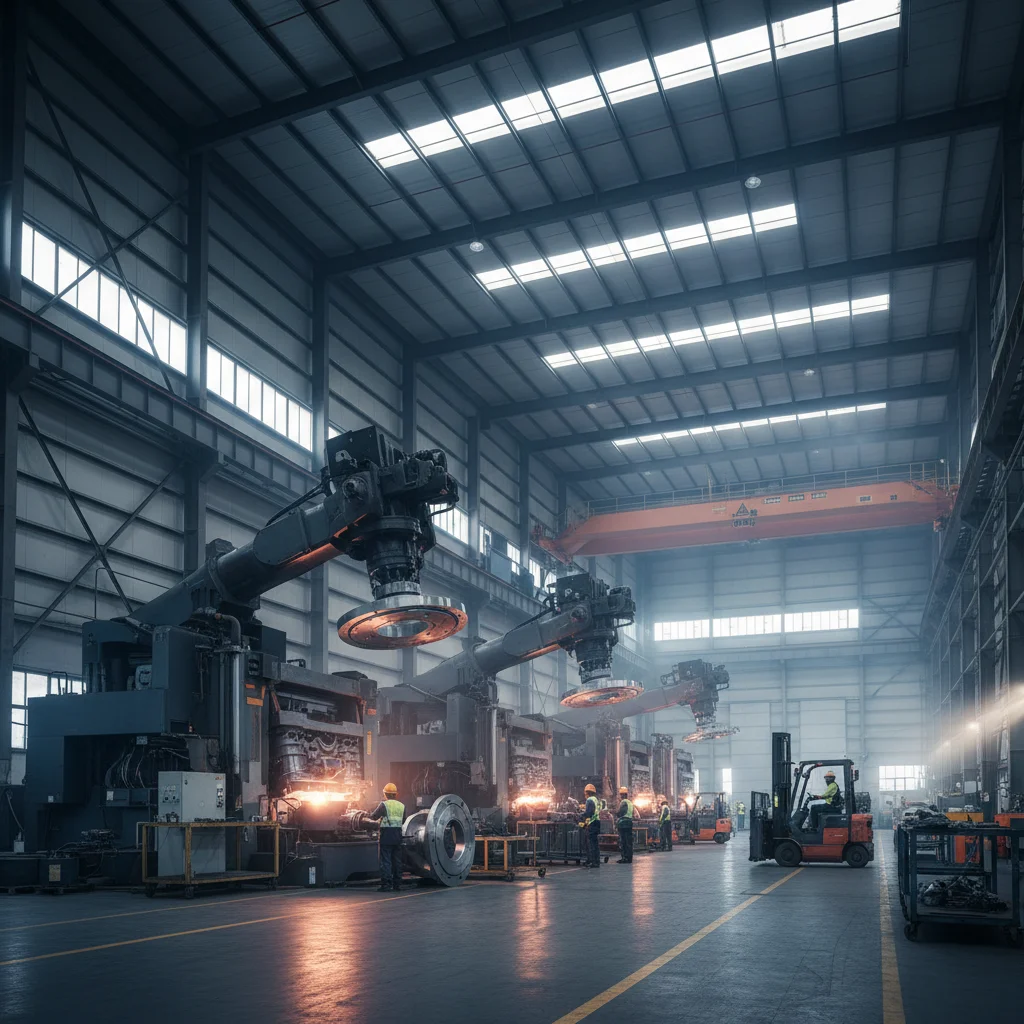
At its core, a large forged ring factory is a specialized facility equipped with heavy-duty hydraulic presses, ring rolling mills, and sophisticated heat-treatment furnaces. The process involves heating a cylindrical ingot to a plastic state and then using a rolling mill to expand the diameter while reducing the wall thickness, creating a seamless ring. This ensures that the metal's internal flow follows the contour of the part, providing maximum strength.
Modern capabilities extend beyond simple shapes to include Custom Machined Rings, Forged Discs, and complex Tube Sheet Forgings. These facilities employ CNC machining centers and ultrasonic testing (UT) to ensure that every single ring is free from internal defects. This level of precision is mandatory for high-pressure environments, such as those found in nuclear power plants or deep-sea oil drilling rigs.
Furthermore, the ability to work with a diverse range of materials—from carbon steels and alloy steels to stainless and super-alloys—defines the versatility of a leading large forged ring factory. This material flexibility allows the factory to serve multiple industries simultaneously, ensuring that the specific chemical composition and hardness requirements of each client are met with absolute precision.
Key Technical Factors in Ring Production
The primary driver of quality in a large forged ring factory is Grain Flow Optimization. Unlike casting, where the molecular structure is random, forging aligns the grain of the metal. This alignment significantly enhances the ring's resistance to impact and stress, which is vital for components like Heavy Shaft Forgings.
Thermal Precision is another critical factor. A large forged ring factory must maintain strict temperature controls during the heating and cooling phases. Improper quenching or tempering can lead to internal stresses or brittleness, compromising the integrity of Forged Flanges and Nozzle Neck Forgings.
Finally, Dimensional Tolerance determines the efficiency of the final assembly. By utilizing precision ring rolling, a large forged ring factory can deliver "near-net-shape" components. This minimizes the need for extensive machining, which not only lowers the cost but also preserves the beneficial forged surface layer.
Global Applications and Industrial Use Cases
The products from a large forged ring factory are ubiquitous in critical infrastructure. In the energy sector, Large Ring Forgings are used as the main structural supports for wind turbine bearings and hydroelectric generators. These components must endure millions of cycles of stress without developing fatigue cracks, making the forged structure indispensable.
In the aerospace and defense industries, the requirements are even more stringent. Forged rings are used in jet engine casings and landing gear components. Here, the large forged ring factory must adhere to AS9100 standards, ensuring that every micron of the material is documented and tested. Similarly, in the petrochemical industry, Weld Neck Flanges and Hollow Cylinders are used to contain volatile gases at extreme pressures.
Performance Comparison of Large Forged Ring Factory Methods
Strategic Advantages of Forged vs. Cast Rings
When choosing a supplier, understanding the difference between a large forged ring factory and a casting house is vital. Cast rings are created by pouring molten metal into a mold; while this is cost-effective for very complex shapes, it often leaves internal porosity and a weaker, non-directional grain structure. In contrast, forged rings are mechanically worked, which "squeezes" out impurities and creates a dense, cohesive structure.
The long-term value of selecting a large forged ring factory manifests in reduced maintenance costs and enhanced safety. Forged components have a higher strength-to-weight ratio, allowing engineers to design lighter yet stronger machines. This reliability is a logical necessity for high-stakes environments where a single component failure could lead to catastrophic losses.
Future Trends in Forging Technology
The industry is currently witnessing a digital transformation. A forward-thinking large forged ring factory is integrating AI-driven simulation software to predict metal flow before the first billet is even heated. This "digital twin" approach allows for the optimization of the forging process, reducing material waste and energy consumption.
Sustainability is also becoming a core pillar of production. With the push toward "Green Steel," factories are exploring hydrogen-powered furnaces and electric heating systems to reduce the carbon footprint of Large Ring Forgings. This transition not only helps the environment but also aligns with the strict ESG (Environmental, Social, and Governance) requirements of global corporate clients.
Additionally, the rise of automation and robotics in the finishing stages is increasing the consistency of products like Rolled Seamless Rings and Sleeves & Bushings. By automating the descaling and initial machining processes, a large forged ring factory can ensure that human error is minimized and delivery timelines are shortened.
Overcoming Challenges in Large Scale Forging
One of the most persistent challenges in the operation of a large forged ring factory is managing the extreme thermal gradients in very large parts. When a ring is massive, the core stays hot longer than the surface, which can lead to uneven cooling and internal stress. To solve this, expert factories use controlled cooling chambers and precise annealing cycles.
Another limitation is the logistical complexity of transporting oversized forged components. Moving a 50-ton forged disc requires specialized transport and rigorous planning. Leading factories solve this by offering integrated logistics solutions, managing the process from the forge to the client's site to ensure the part is not damaged during transit.
Finally, maintaining strict quality control across different batches of raw materials remains a hurdle. To overcome this, a top-tier large forged ring factory implements a rigorous raw material auditing process, requiring mill certificates and conducting independent chemical analysis on every ingot before production begins.
Comparative Analysis of Forging Challenges and Solutions
| Challenge Category |
Technical Limitation |
Factory Solution |
Impact Score (1-10) |
| Thermal Management |
Uneven cooling in large rings |
Controlled Annealing |
9 |
| Material Integrity |
Internal porosity/voids |
Ultrasonic Testing (UT) |
10 |
| Dimensional Drift |
Ovality in large diameters |
Precision Ring Rolling |
8 |
| Logistics |
Extreme weight/size |
Specialized Heavy Haulage |
7 |
| Energy Waste |
High carbon footprint |
Electric Induction Heating |
8 |
| Surface Quality |
Oxide scale formation |
Automatic Descaling |
7 |
FAQS
The primary advantage is the structural integrity. A large forged ring factory uses mechanical deformation to align the metal's grain flow, which eliminates internal porosity and significantly increases fatigue strength and impact resistance. This makes forged rings far more reliable for high-pressure and high-stress applications than cast alternatives.
Quality is ensured through a combination of rigorous testing and process control. This includes Ultrasonic Testing (UT) and Magnetic Particle Inspection (MPI) to detect internal flaws, chemical analysis of the raw steel, and strict adherence to heat treatment protocols to ensure the desired hardness and ductility are achieved.
Yes, most professional factories specialize in custom forgings. They can work with a wide array of materials—including stainless steel, alloy steel, and nickel-based superalloys—and can produce rings to specific diameters and wall thicknesses based on the client's engineering blueprints.
Lead times vary based on the complexity and size of the ring, as well as the material availability. Generally, a custom large forged ring may take from 8 to 16 weeks, including the forging process, heat treatment, machining, and final quality inspection.
Ring rolling is generally superior for creating seamless, concentric rings with high precision and less material waste. Open-die forging is more flexible for non-circular shapes but requires significantly more machining to achieve the final ring geometry, increasing the overall cost and production time.
You should request the factory's ISO 9001 or AS9100 certifications, as well as Material Test Reports (MTRs) for the specific batch of steel used. A reputable factory will provide full traceability documentation, showing the material's origin and the exact parameters of the forging and heat-treatment cycles.
Conclusion
In summary, the expertise provided by a large forged ring factory is indispensable for the safety and efficiency of modern heavy industry. From the optimization of grain flow and strict thermal management to the adoption of AI-driven simulations and green energy, these facilities transform raw metal into the high-performance components that drive global infrastructure. By prioritizing mechanical integrity and precision, forging ensures that critical assets in the energy, aerospace, and petrochemical sectors can operate reliably under the most extreme conditions.
As we look toward the future, the integration of sustainable manufacturing and digital twins will further elevate the standards of ring production. For companies seeking long-term reliability and structural superiority, partnering with a factory that blends traditional metallurgical craftsmanship with cutting-edge technology is the only logical choice. We invite you to explore how precision forging can optimize your next project. Visit our website: www.yxs-forging.com